buildings in Reykjavik

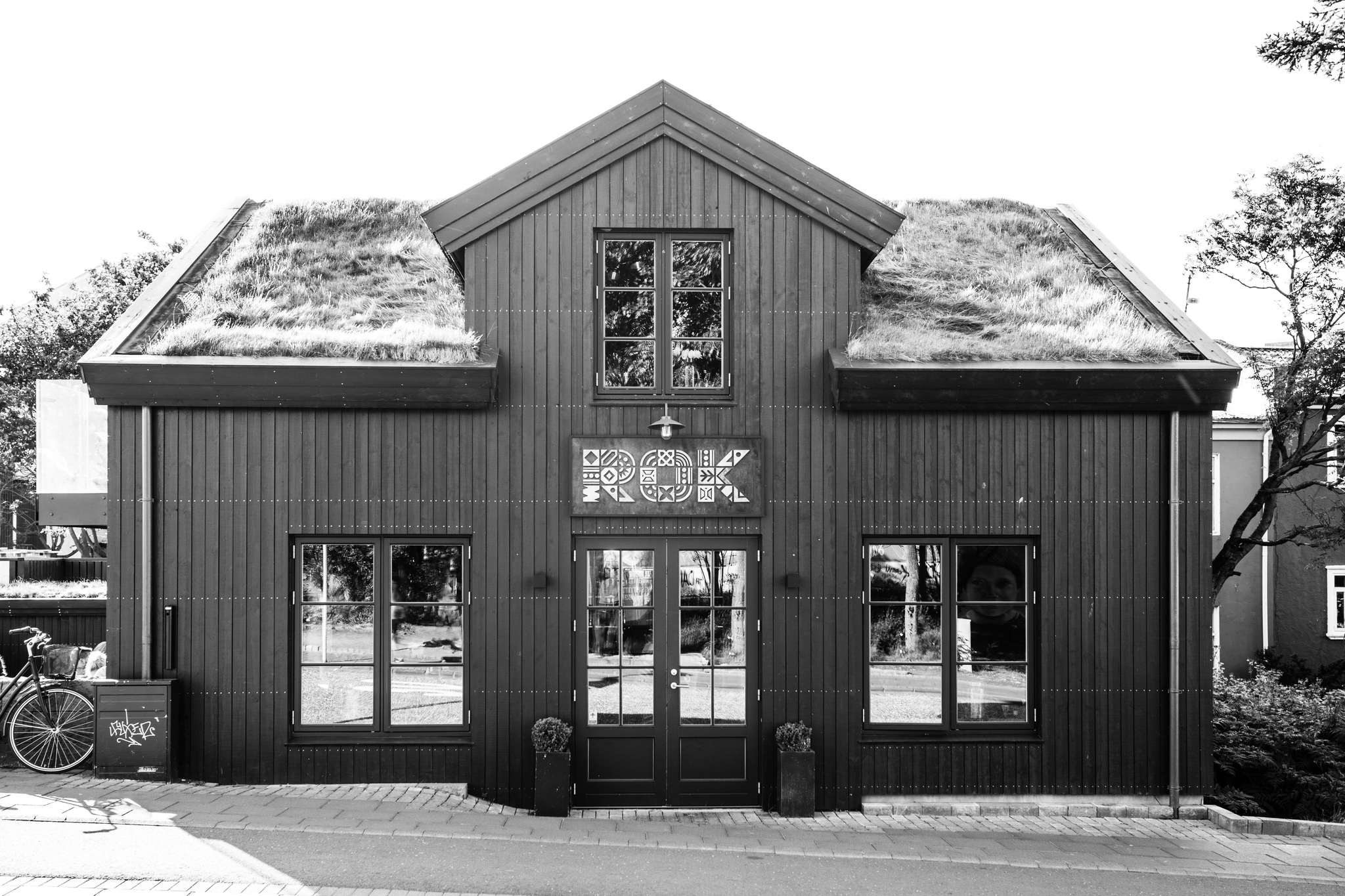
rok restaurant

rok restaurant

Description for the visually challenged

A black wooden building with a steeply pitched roof covered in grass. The front features large windows and a door, with decorative elements above the door. In the foreground, there is a bicycle and a trash bin. The background includes trees and other buildings.

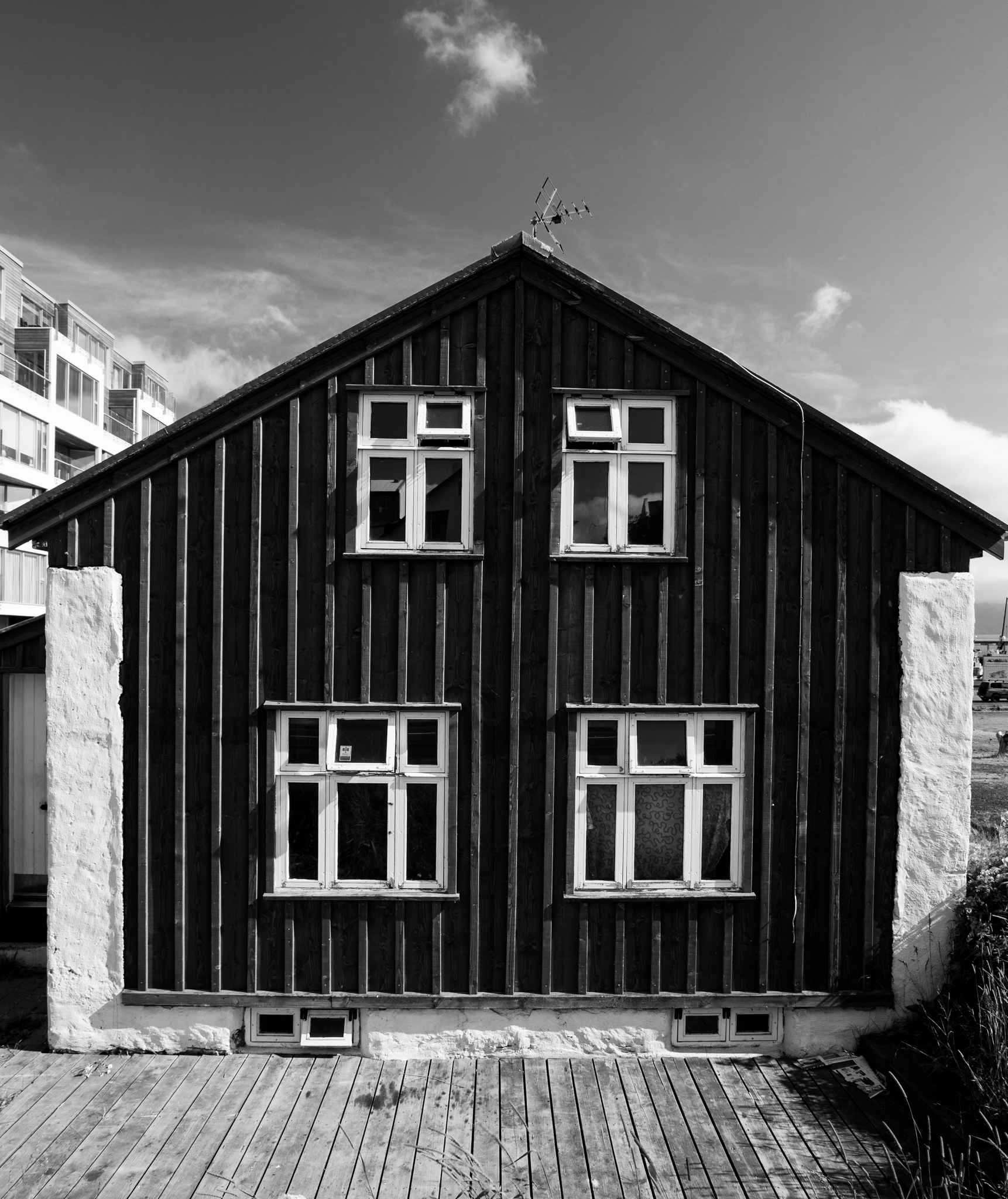
harbour hut

harbour hut

Description for the visually challenged

A wooden house with a steeply pitched roof is shown. The front has four windows, two on the upper level and two on the lower level, with a white wall on the left side. The house is set against a cloudy sky, and a wooden deck is visible in the foreground.

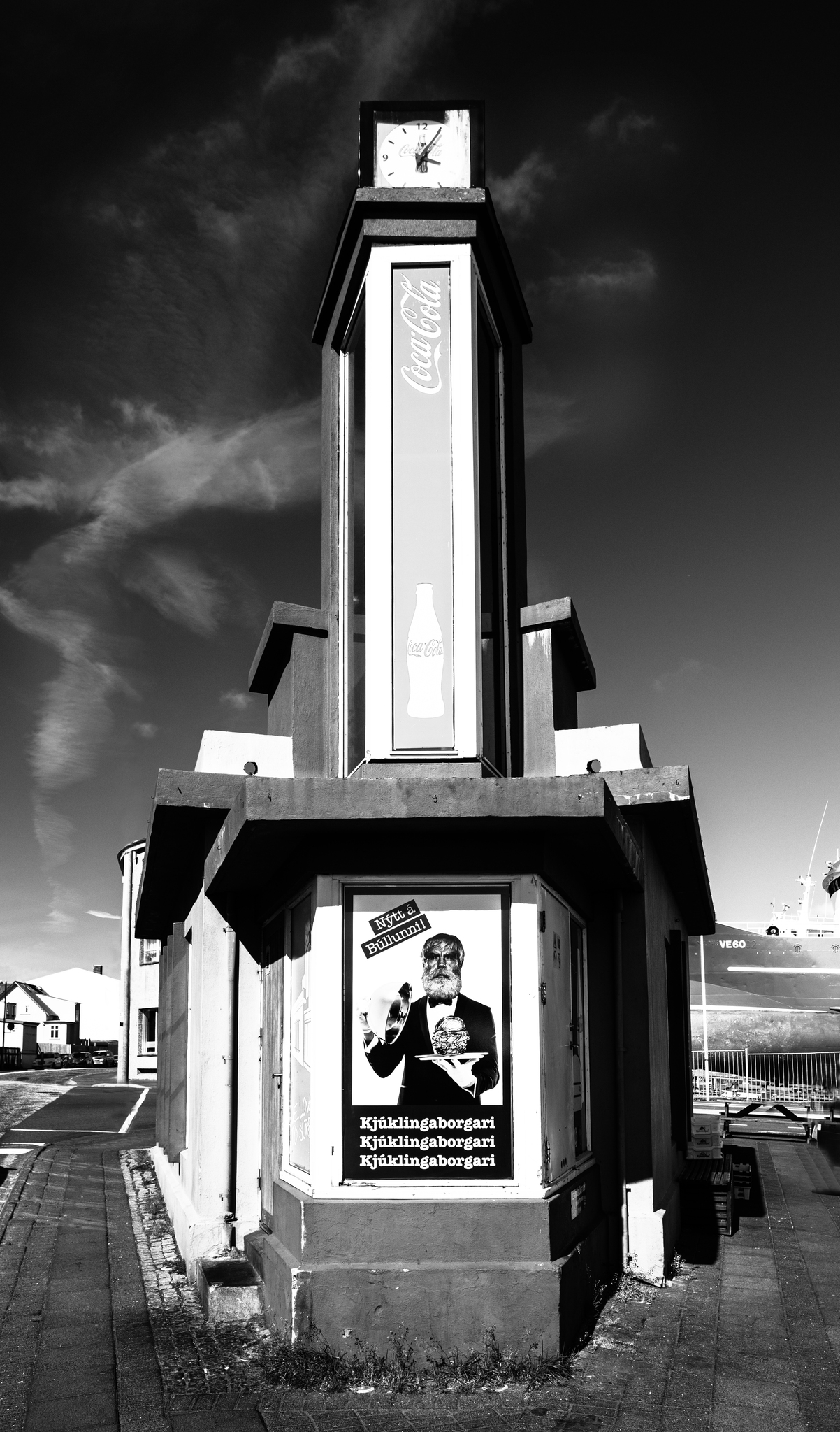
hamborgara bullan – tommi’s burger joint

hamborgara bullan - tommi's burger joint

Description for the visually challenged

A tall clock tower is visible, with a Coca-Cola logo on its side. The clock shows a time close to 12:00. Below the clock, there is a poster featuring a man with a beard holding a dish, along with text in a language that includes ‘Nýt & Búhúmali’. The background shows a blue sky with clouds and a ship in the distance.

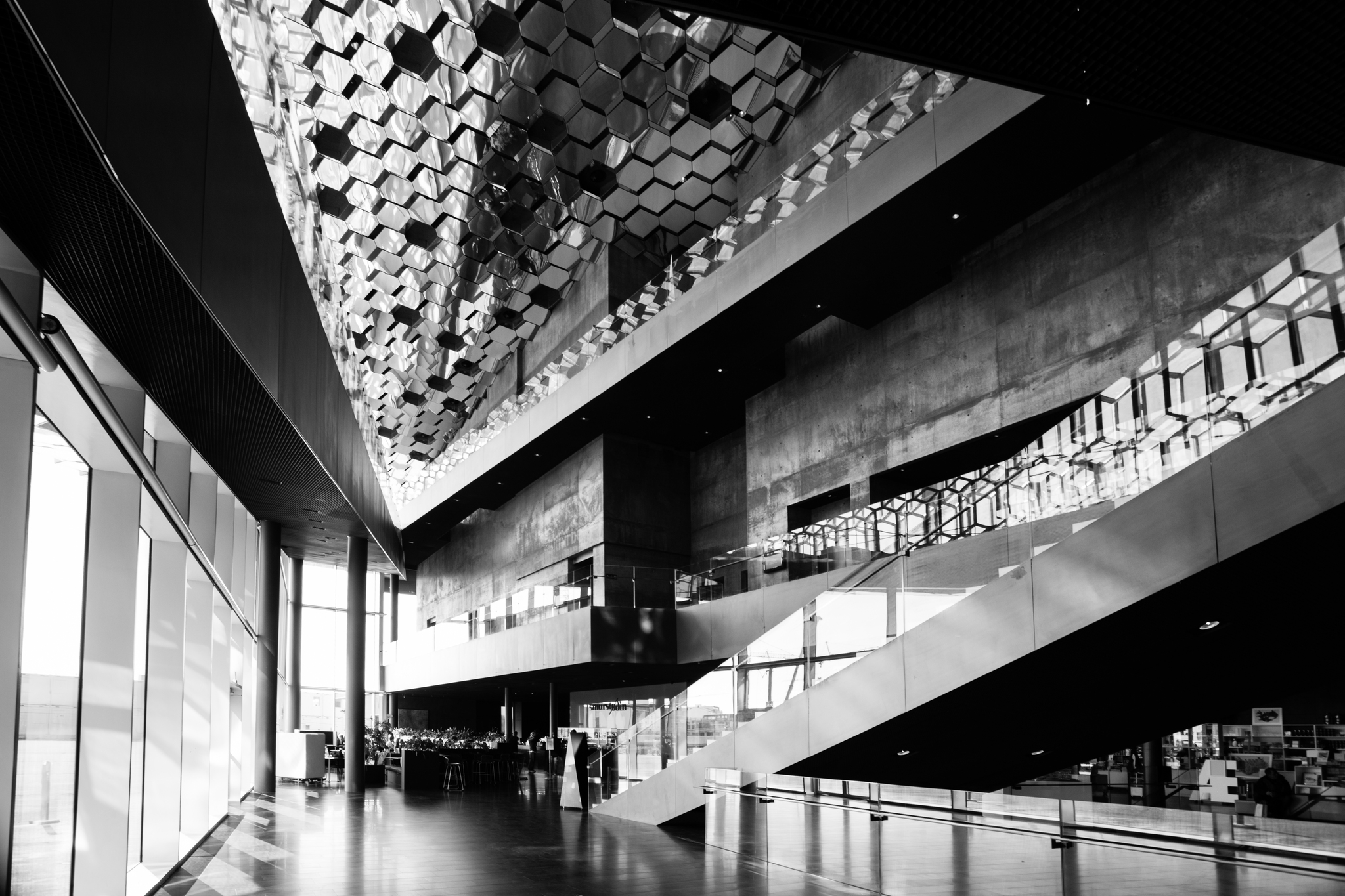
harpa concert hall – interior

harpa concert hall - interior

Description for the visually challenged

The image shows a modern interior space with a high ceiling and large windows. A staircase with a glass railing leads to an upper level. The ceiling features a reflective, hexagonal pattern, and the walls are made of concrete. In the background, there are tables and chairs, possibly indicating a gathering area.

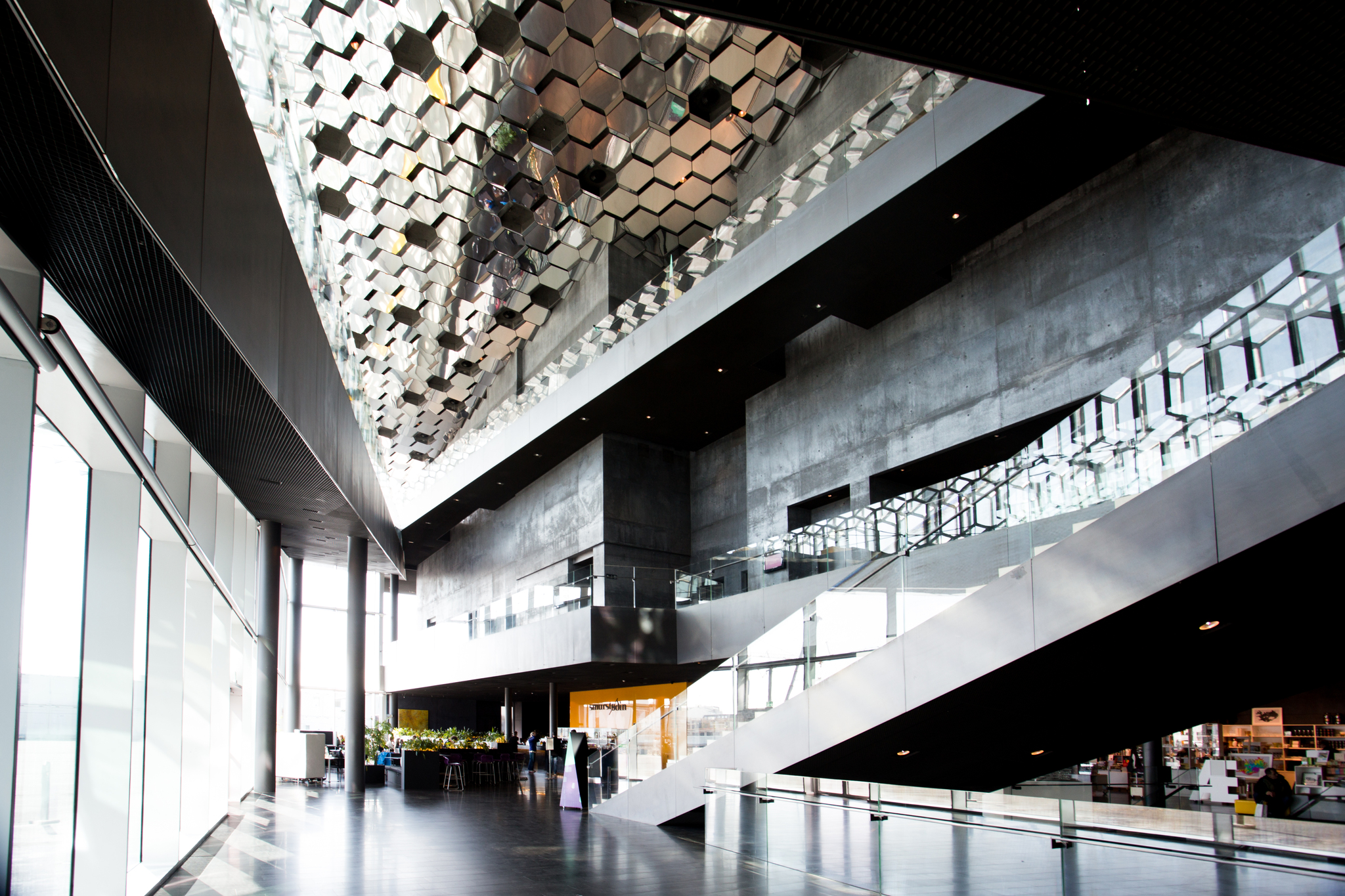
harpa concert hall – interior

harpa concert hall - interior

Description for the visually challenged

The image shows a modern interior space with a high ceiling and large windows. The ceiling features a reflective, hexagonal pattern, while the walls are made of concrete. A staircase with glass railings leads to an upper level, and there are tables and chairs visible in the background.

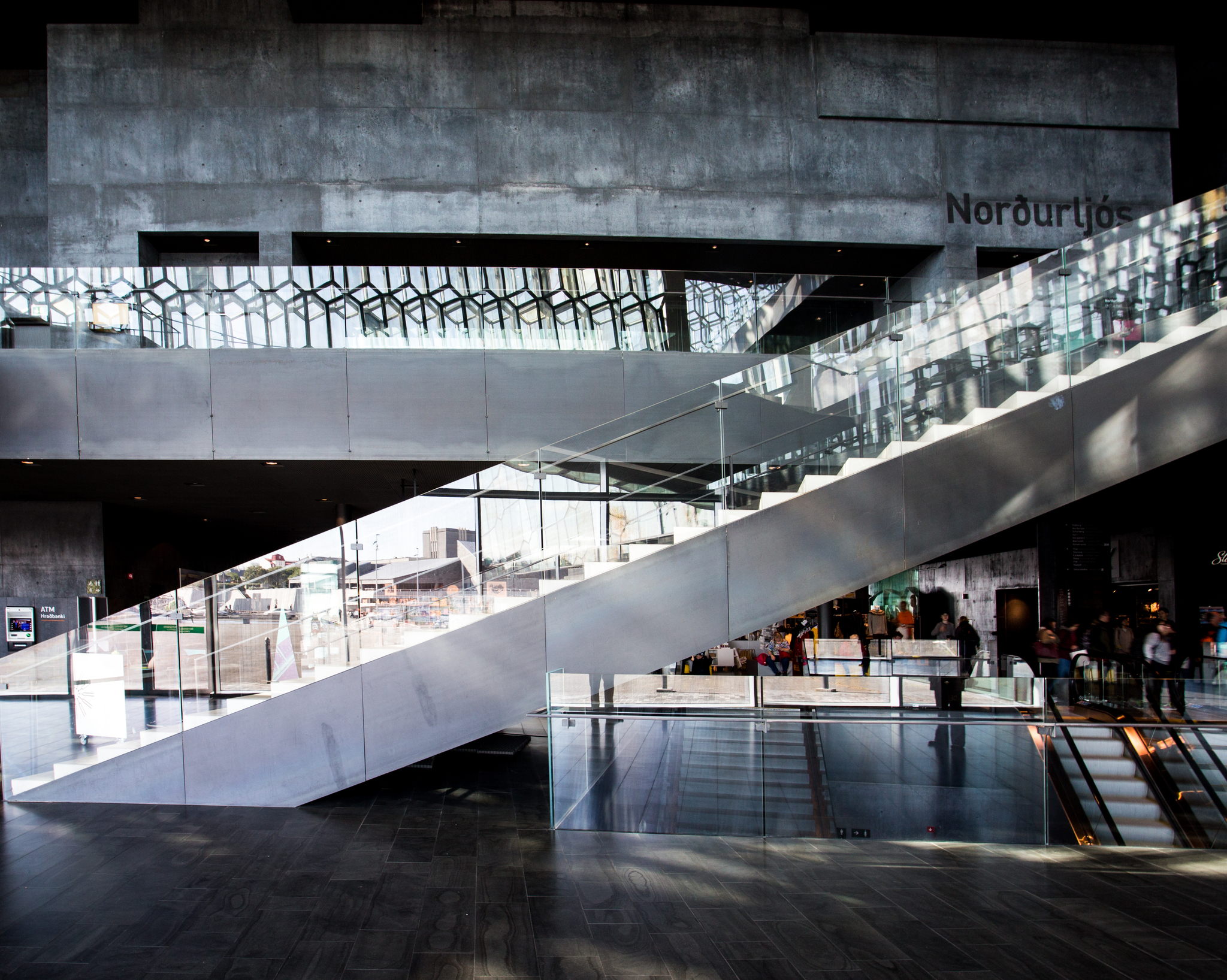
harpa concert hall – interior

harpa concert hall - interior

Description for the visually challenged

The image shows a modern interior space with a large, angular staircase made of metal and glass. The walls are gray concrete, and there are reflections of light on the surfaces. In the background, people can be seen, and a sign with the text ‘Norðurljós’ is visible on the wall.

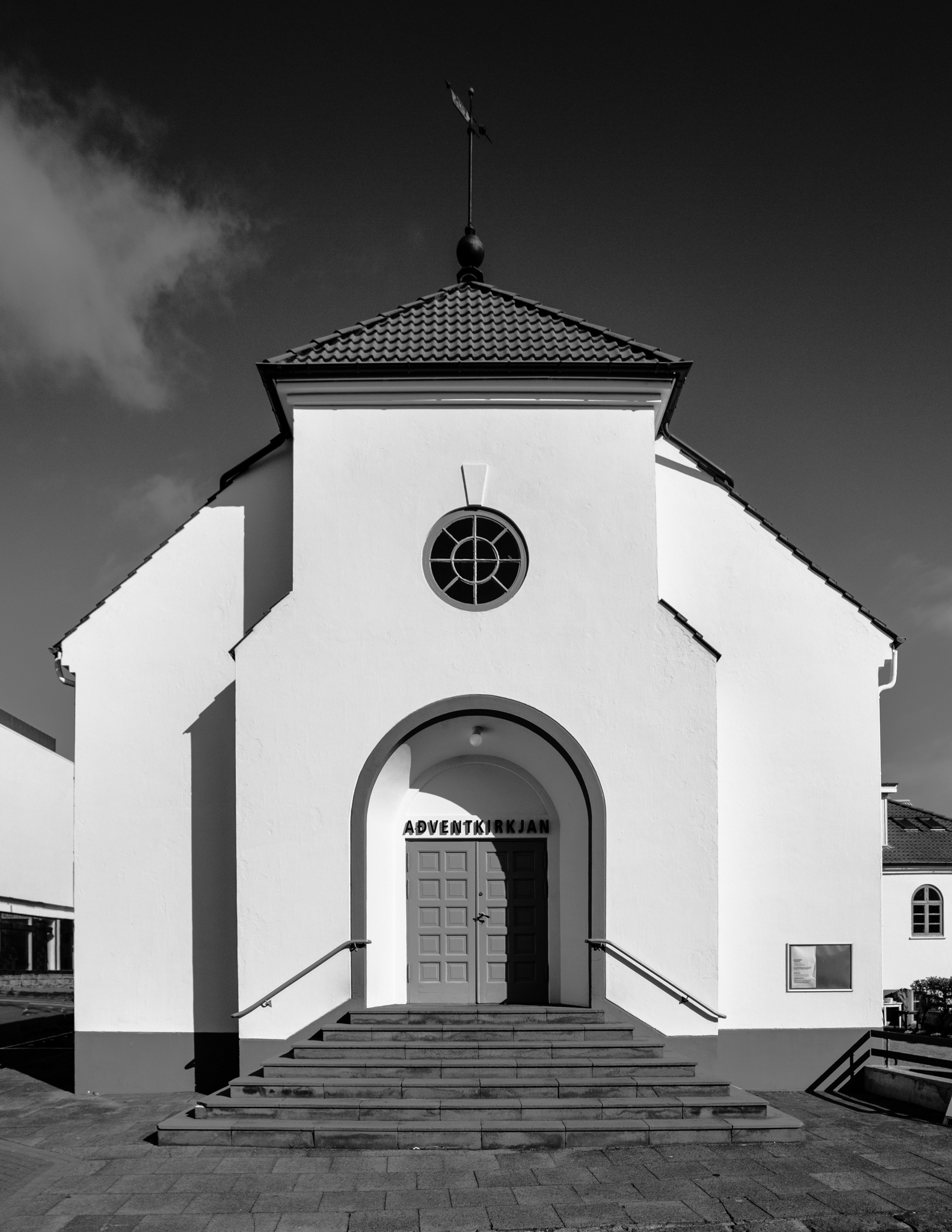
adventkirkjan

adventkirkjan

Description for the visually challenged

The image shows a white church building with a sloped roof and a weather vane at the top. The entrance features a large archway with a double door painted in gray. The word ‘ADVENTKIRKJAN’ is displayed above the door, and there are steps leading up to the entrance. The background is mostly clear, with some clouds visible in the sky.

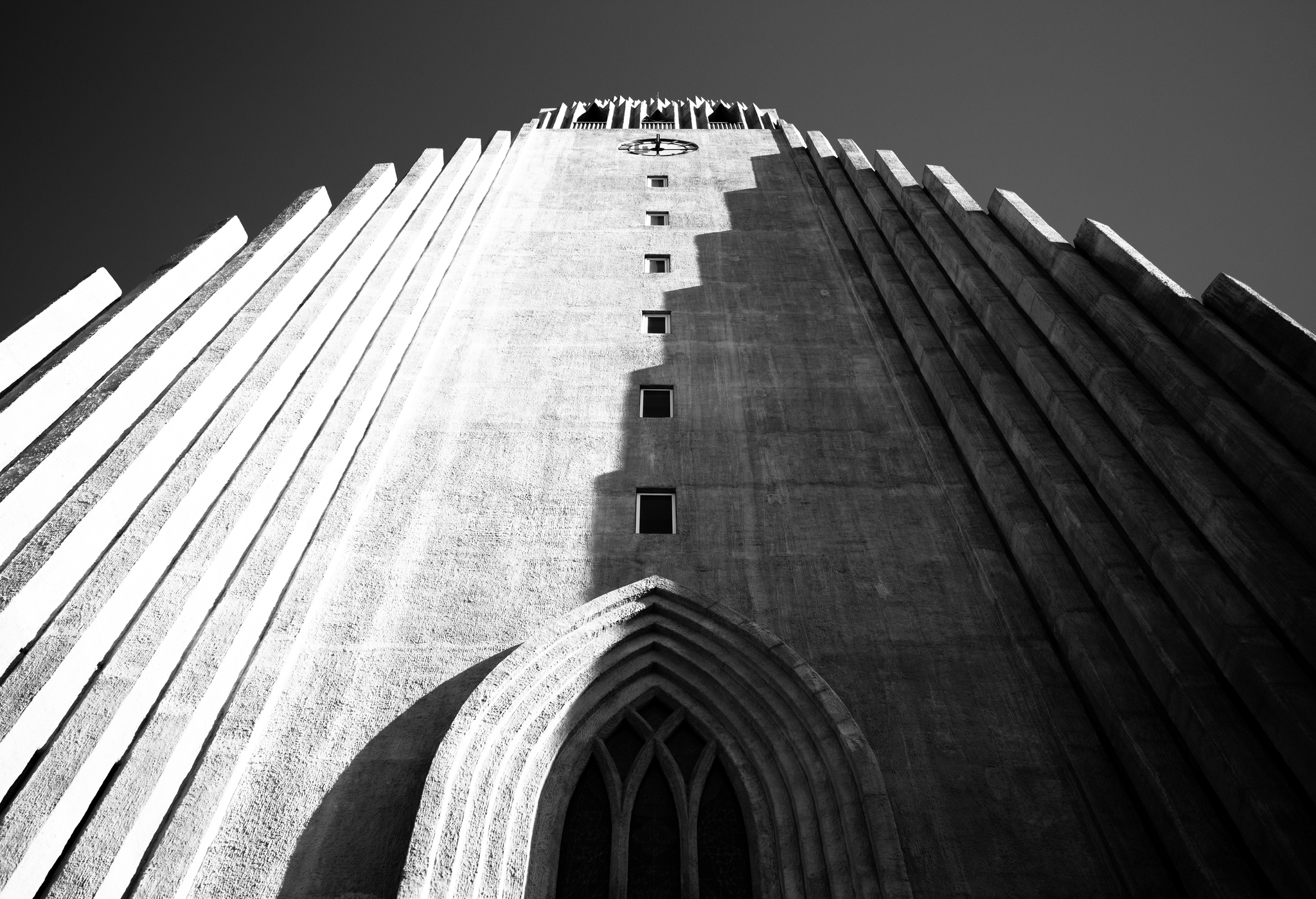
hallgrimskirkja

hallgrimskirkja

Description for the visually challenged

The image shows a tall, textured building viewed from below, with a series of vertical, protruding elements on one side. The structure has a large archway at the bottom and several small windows along the upper section. The photo is in black and white, emphasizing the contrast between light and shadow.

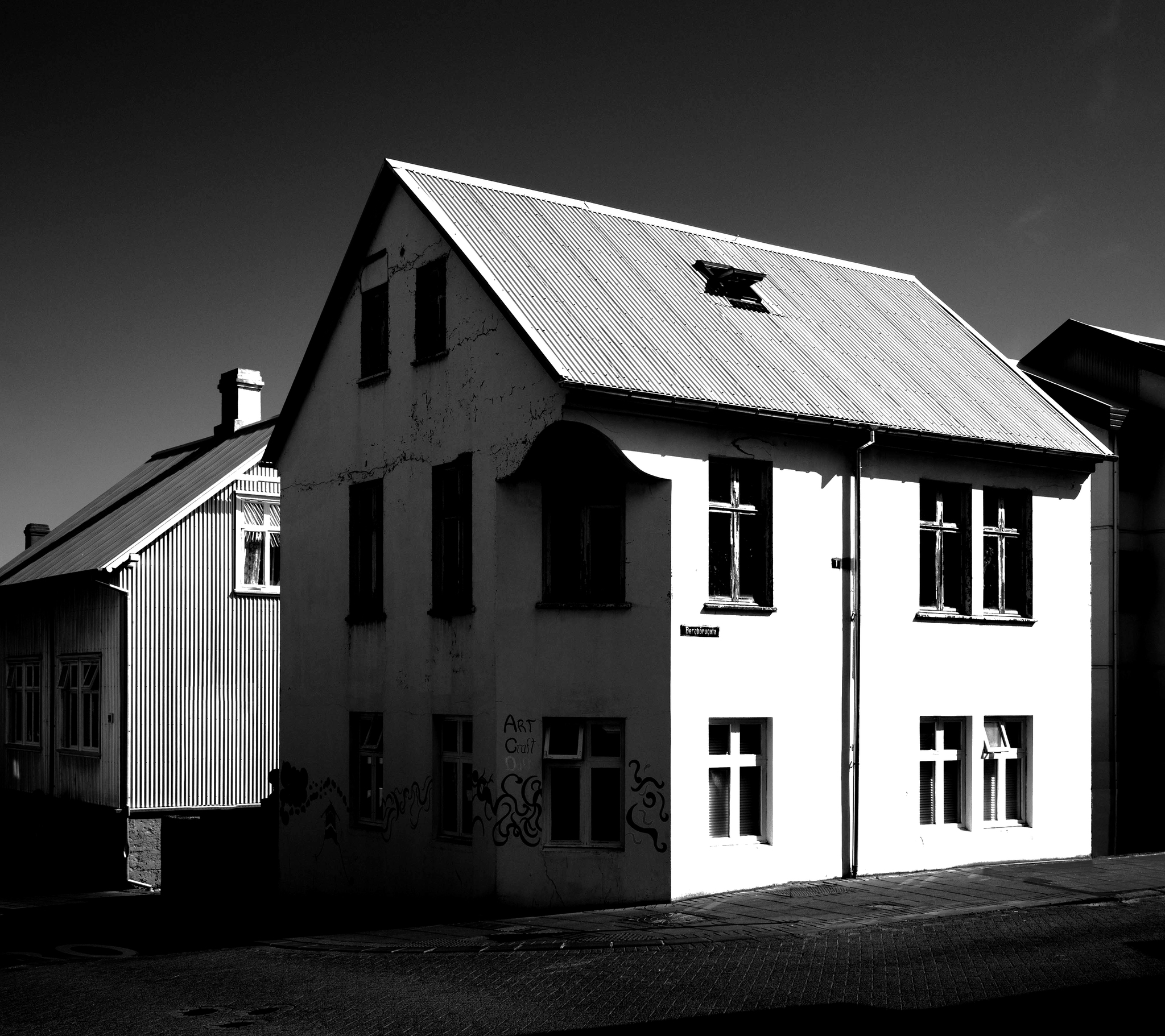
high contrast house

high contrast house

Description for the visually challenged

The image shows two buildings in black and white. The building on the right has a white exterior with multiple windows, some displaying graffiti that reads ‘ART’. The building on the left has a corrugated metal roof and a vertical striped facade. The background is a clear sky.

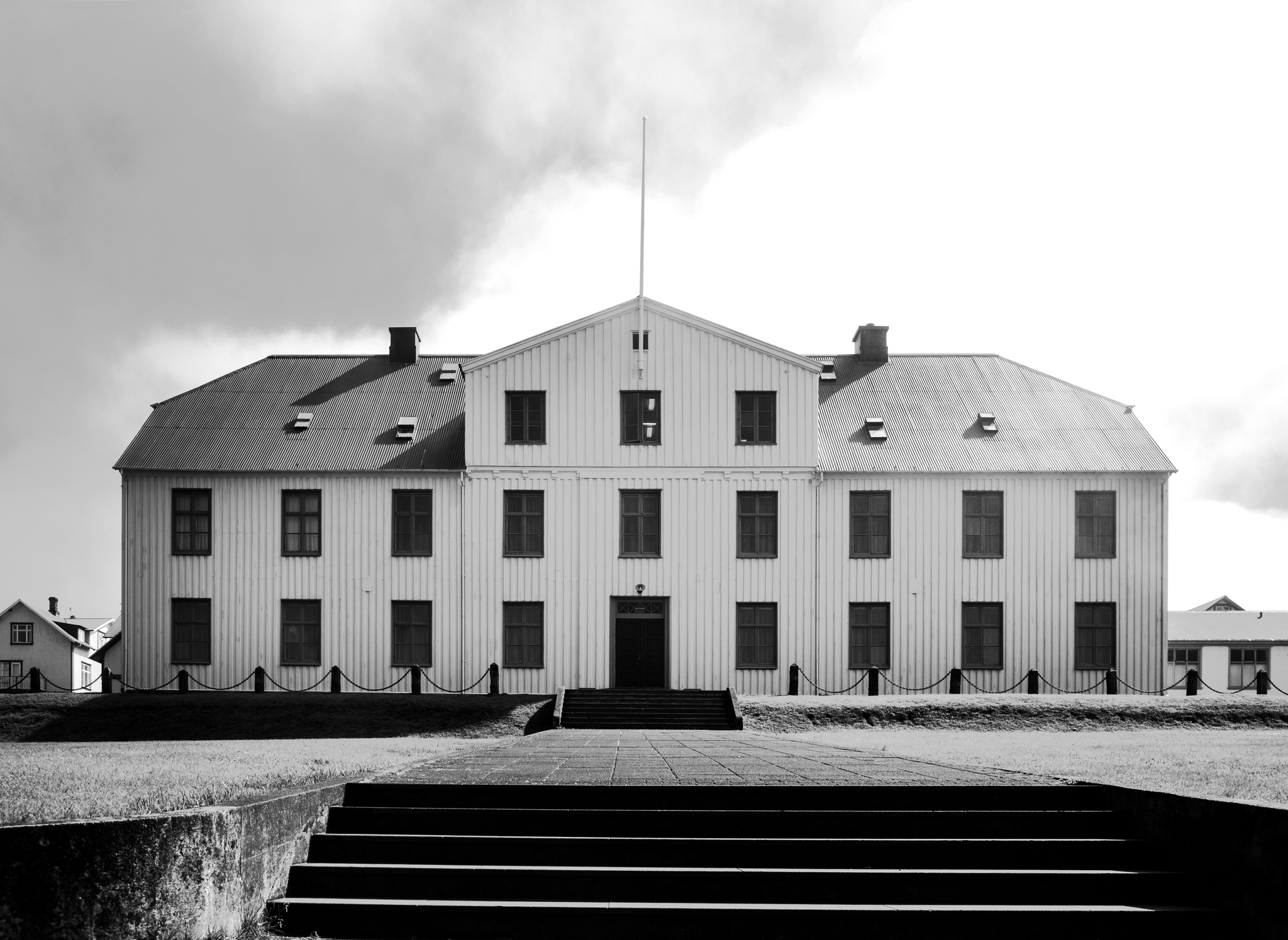
reykjavík junior college

reykjavík junior college

Description for the visually challenged

A large white building with a peaked roof and multiple windows stands prominently. The structure has a central entrance with steps leading up to it. In the foreground, there are stone steps and a grassy area, while a chain fence runs along the front of the building. The sky appears cloudy and bright.

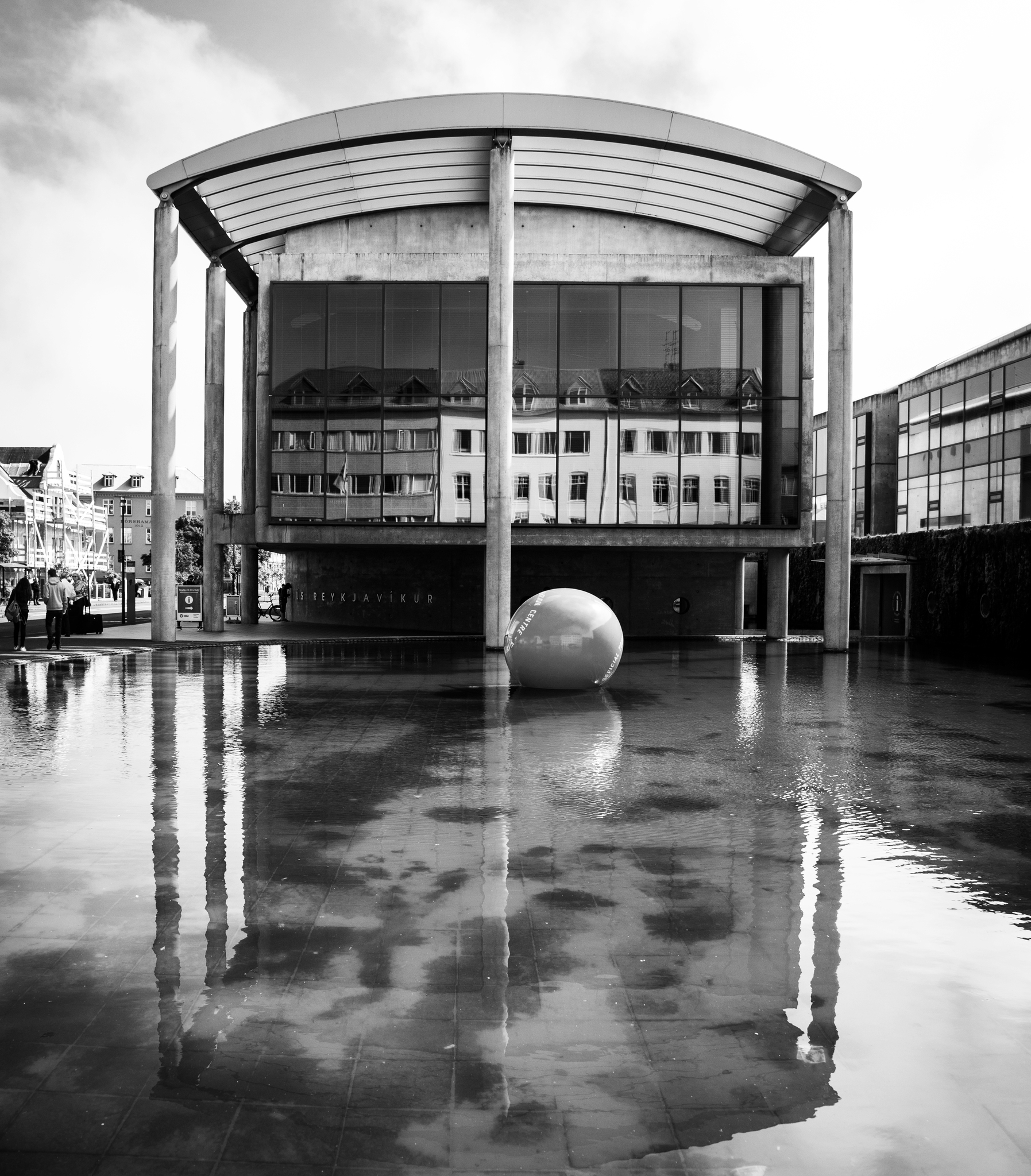
reykjavik city hall

reykjavik city hall

Description for the visually challenged

A modern building with a curved roof and concrete pillars stands near a reflective pool of water. A large, round orange object is positioned in the water, and the building’s glass facade reflects nearby structures. The scene is in black and white, with people walking in the foreground.

Hubbard Street Murals

This is part of a project to photograph some of what was the Hubbard Street mural project initiated in the 1970’s by Ricardo Alonzo, an Art Institute of Chicago graduate.

Over an eight-year period, Alonzo and volunteers from the West Town Community Art Center painted murals along a mile-long stretch of Hubbard Street, from Des Plaines to Ogden, until their funding ran out in 1979.

I first noticed the murals out my Metra train window while I was looking to produce a project influenced by Wabi-sabi, and how it translates to an urban environment outside of Japan.

They provided an ideal way to explore how time and decay have affected these artworks. The originals would have been vibrant and colourful, time, paint overs, weather and construction have taken their toll on the work.

Most people will not see the murals because they are in an obscure place, where most people wouldn’t ordinarily have a chance to view them.

I want to raise awareness of this still-vibrant, if fading, original community project, and to introduce some of my work locally.

After producing some shots in monochrome, I decided to reshoot the set in color to have a better record of the original work.

walrus
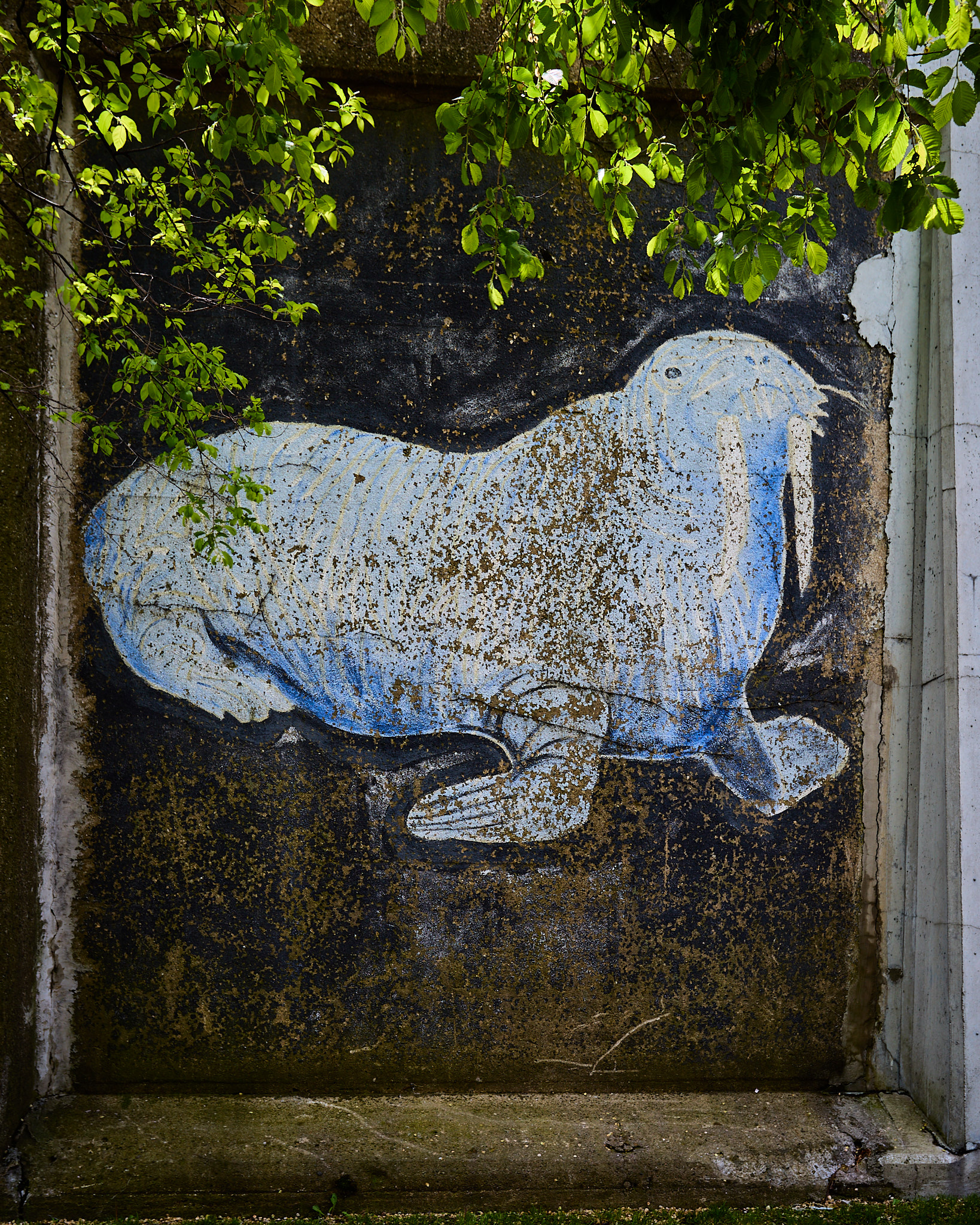
walrus

Original notes

A mural depicting a walrus is painted on a wal

Description for the visually challenged

A mural depicting a walrus is painted on a wall. The walrus is primarily blue with white accents and is positioned against a dark background. Green leaves from a nearby plant partially obscure the top of the mural.

woodpecker
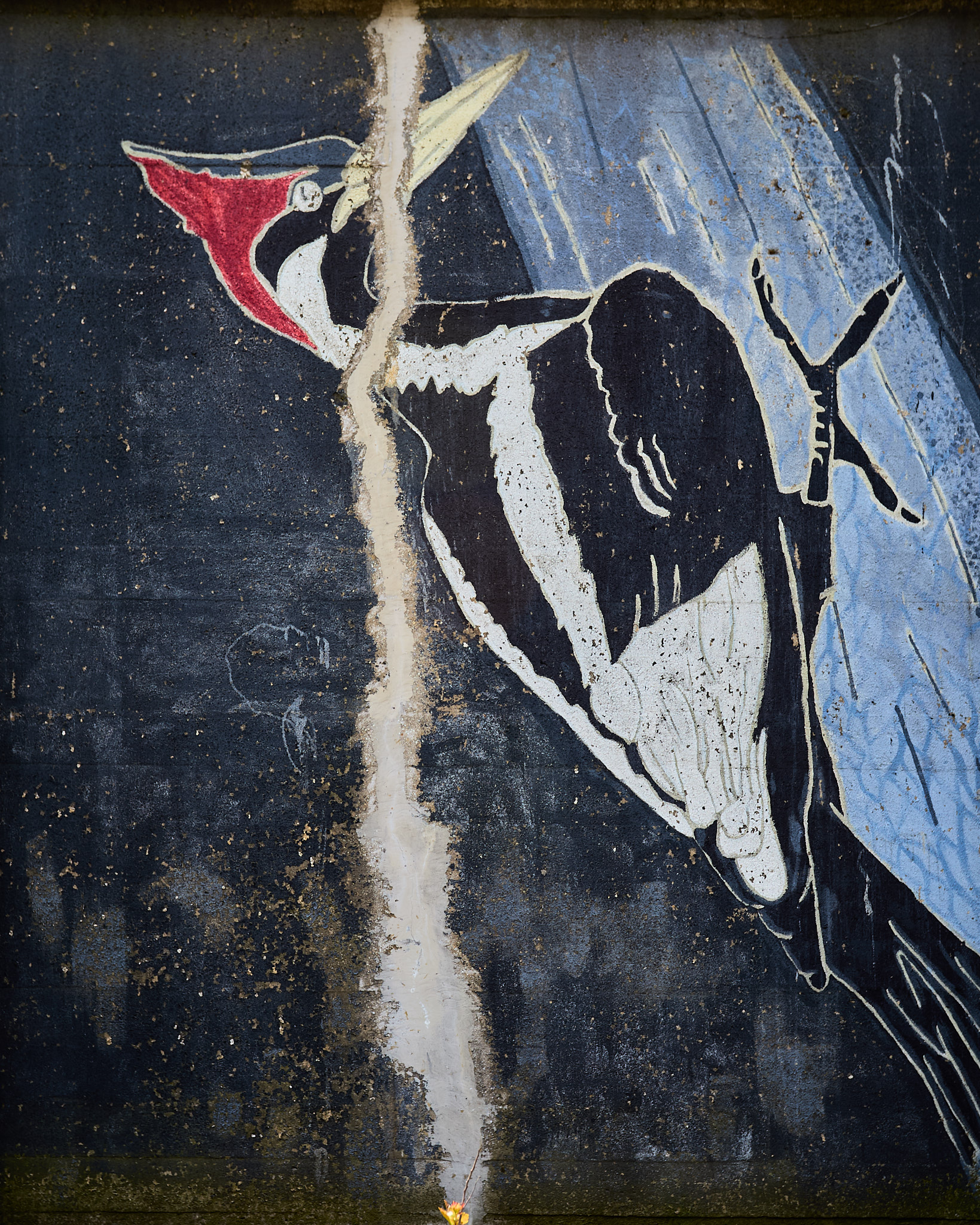
woodpecker

Description for the visually challenged

The image features a mural of a woodpecker on a wall. The woodpecker has a red head, black and white body, and is depicted in profile. There is a vertical crack running through the mural, and the background is dark with some blue elements.

leaping frog
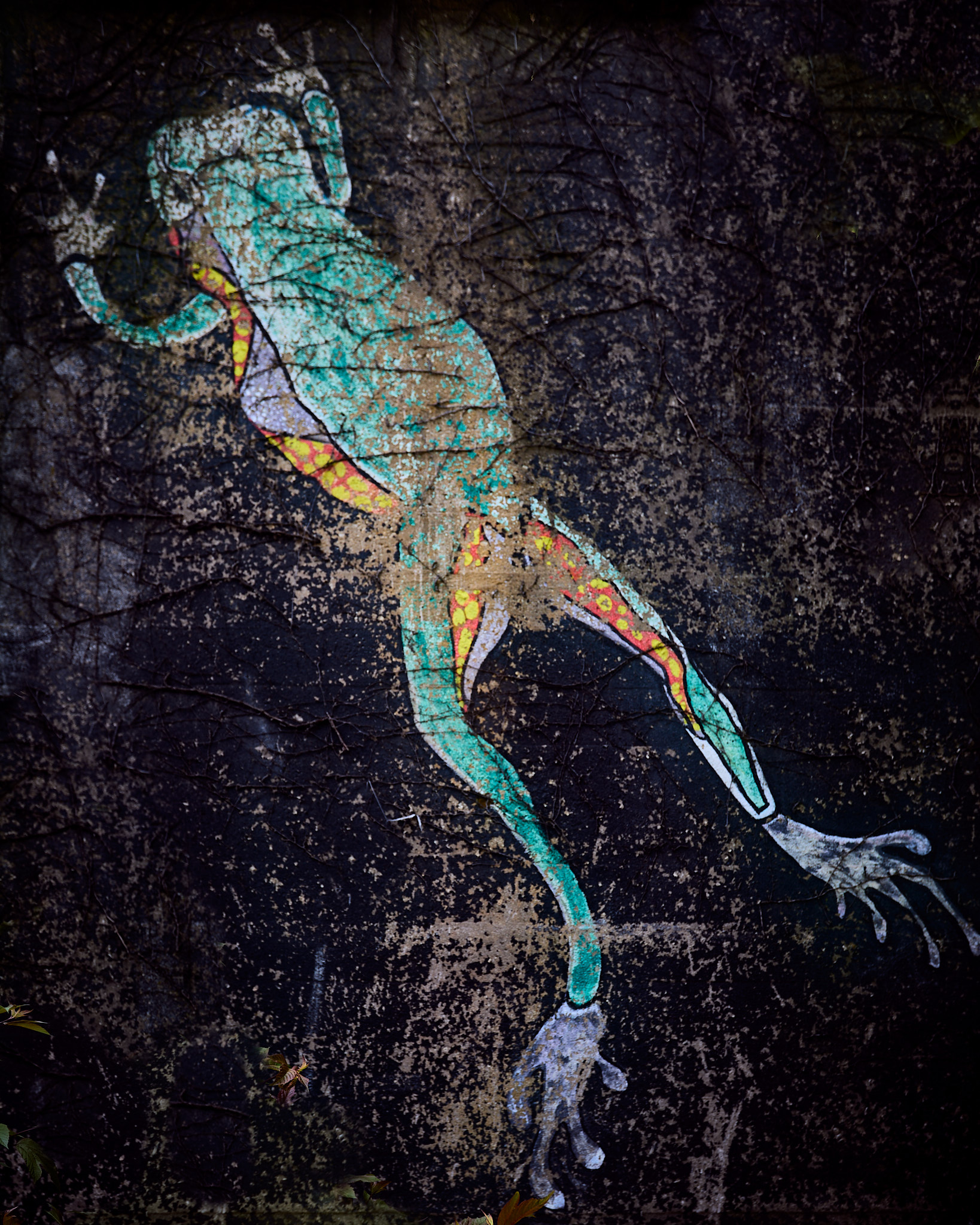
leaping frog

Description for the visually challenged

A colorful mural of a frog is painted on a dark wall. The frog features green, yellow, and purple colors, with visible details like its limbs and webbed feet. The wall shows signs of wear and decay, with cracks and dirt present around the mural.

reptile
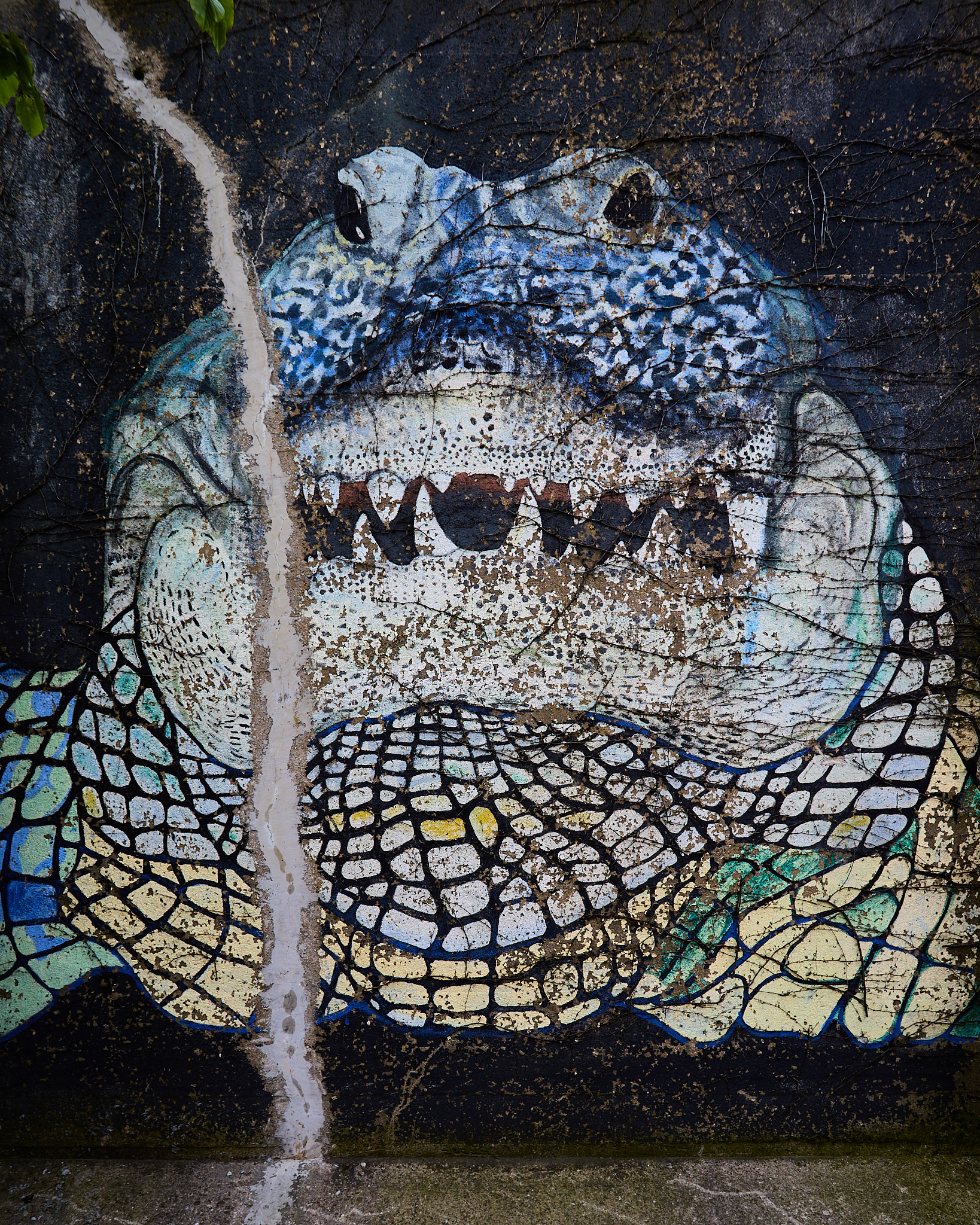
reptile

Description for the visually challenged

The image shows a mural of a large, stylized reptile’s face, featuring blue and green tones. The reptile has sharp teeth and a textured skin pattern. The mural is partially obscured by a vertical crack in the wall, with some dirt and grime visible around the edges.

bird of prey
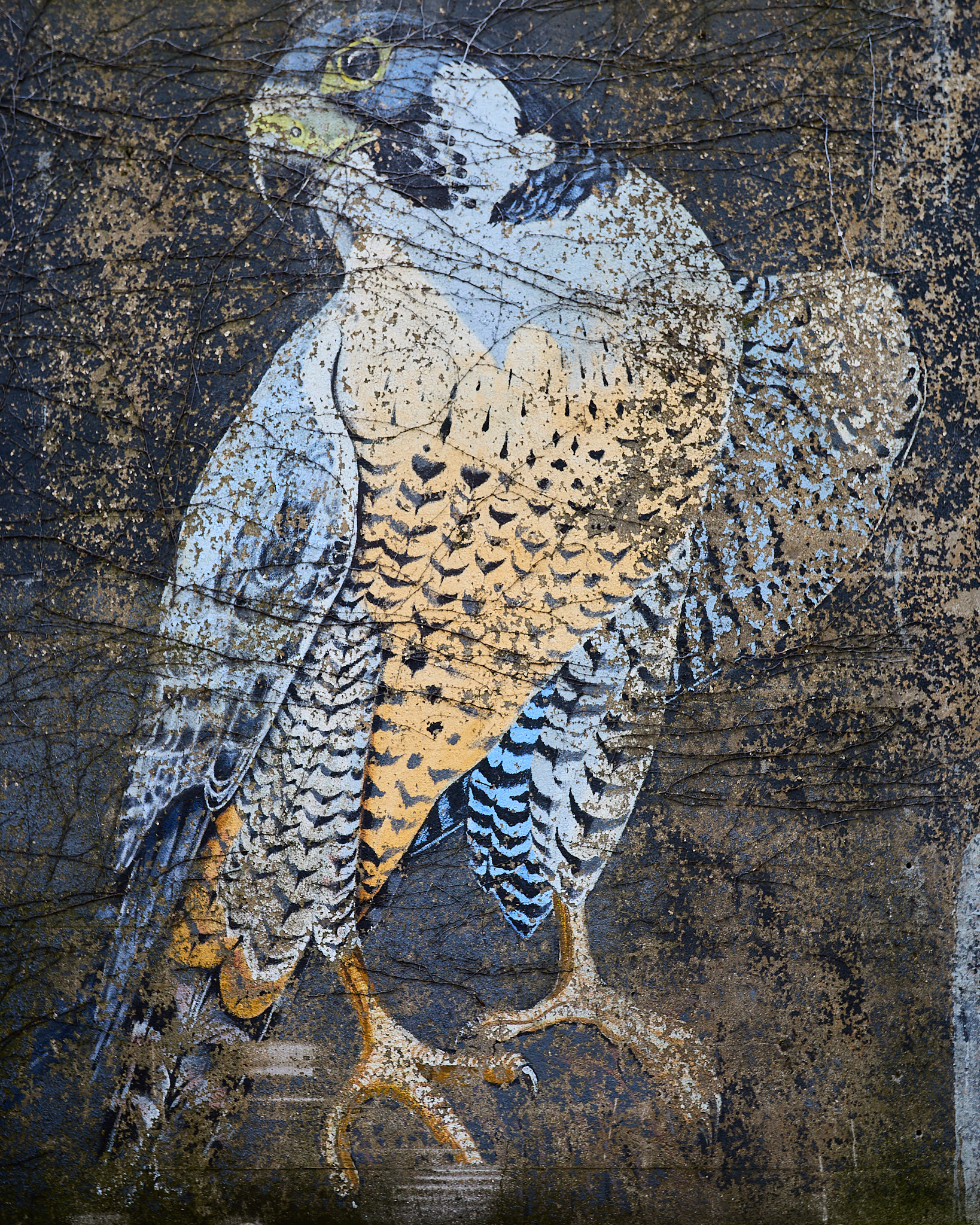
bird of prey

Description for the visually challenged

A mural of a bird, possibly a falcon, is depicted on a textured wall. The bird has a light blue head, a yellow beak, and a body with intricate patterns in shades of beige and blue. The background is dark with visible wear and peeling paint.

butterfly
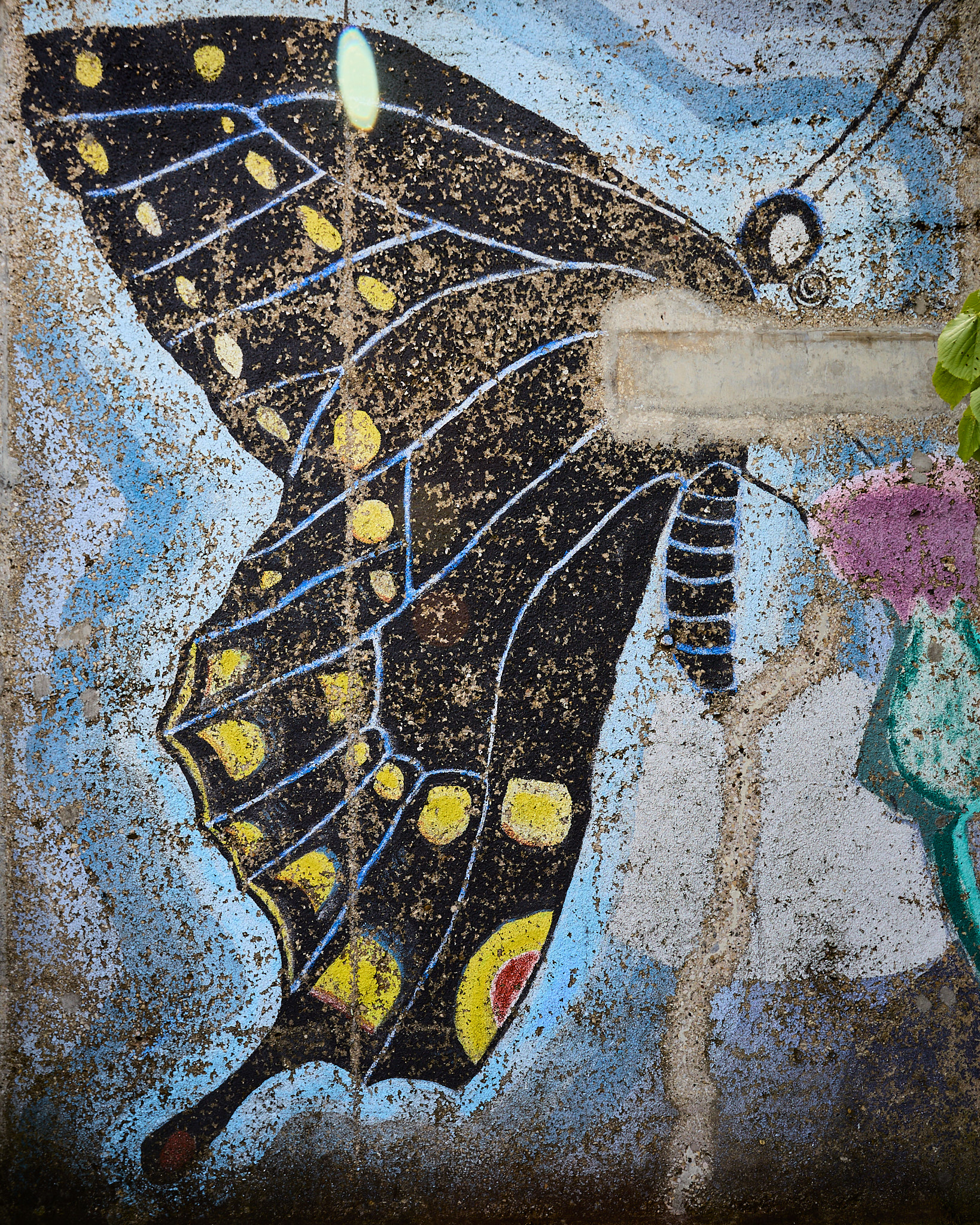
butterfly

Description for the visually challenged

The image features a mural of a butterfly with predominantly black wings adorned with yellow spots and blue outlines. The background is a mix of blue and textured surfaces, with hints of pink and green elements nearby. The mural appears to be weathered and partially obscured by dirt.

busy bee
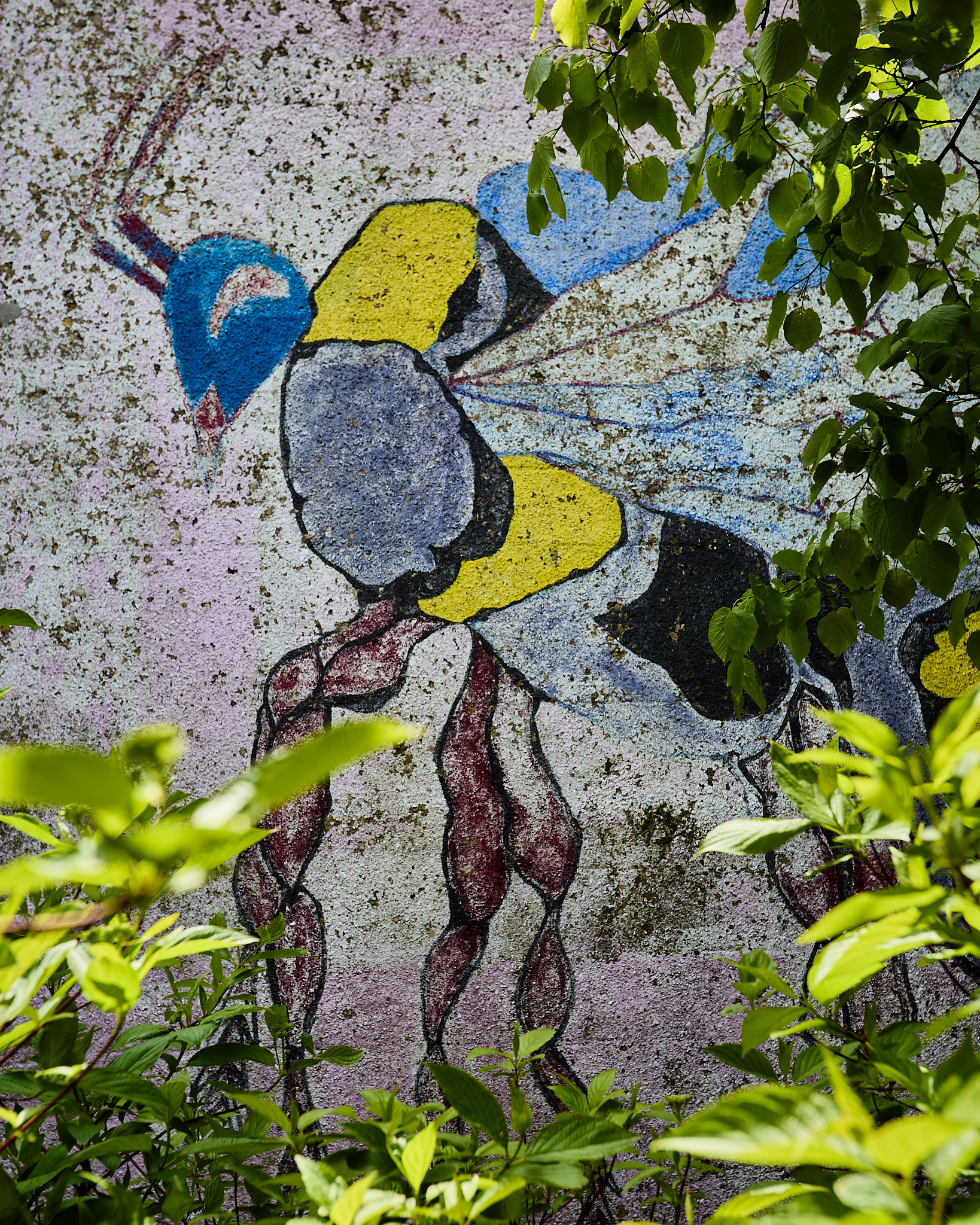
busy bee

Description for the visually challenged

A colorful mural depicting a stylized insect, possibly a bee, is partially obscured by green foliage. The insect features blue, yellow, and black colors, with a textured background of pink and gray. The foreground includes various green leaves and plants.

elephant
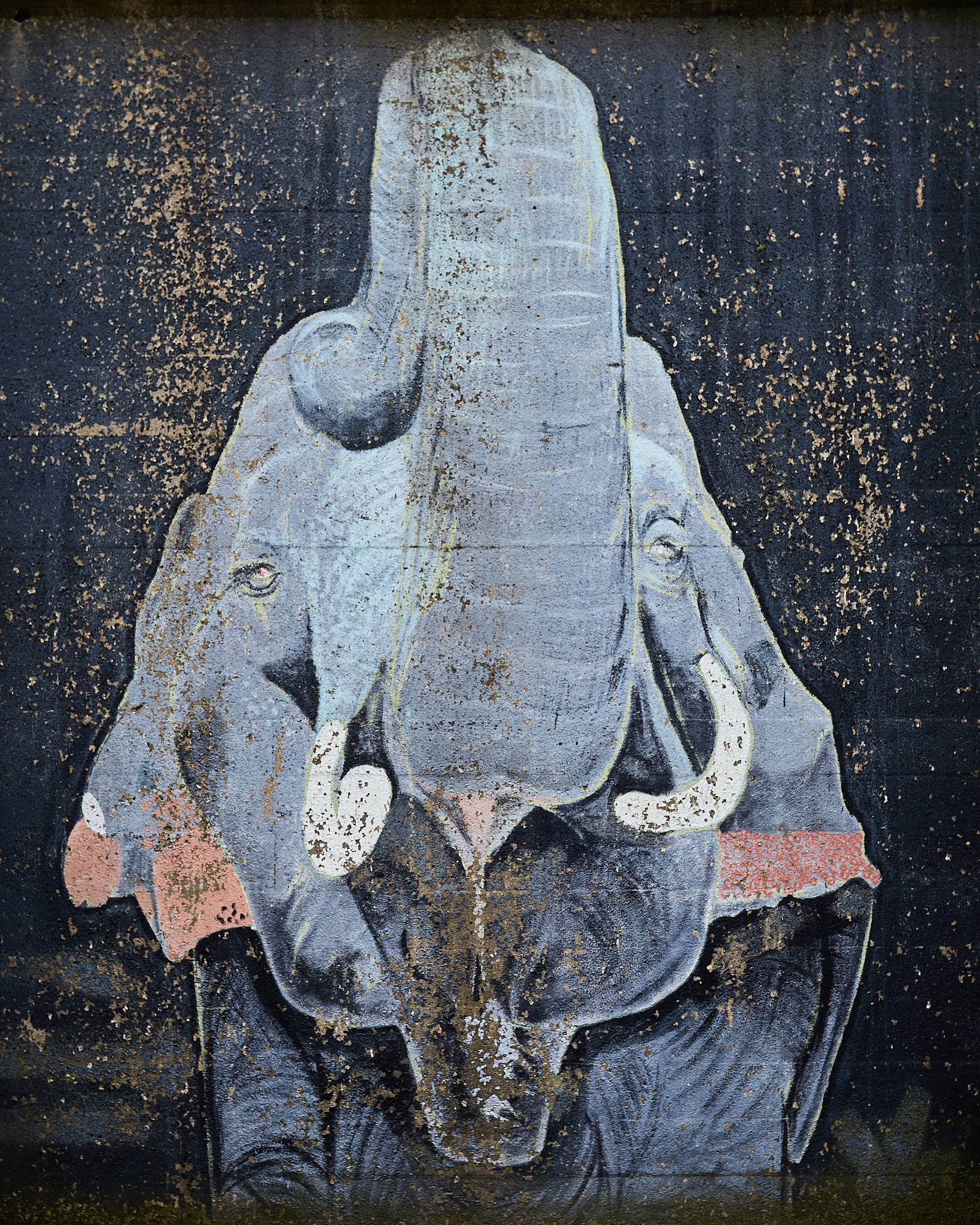
elephant

Description for the visually challenged

The image shows a mural of an elephant’s head on a textured, dark background. The elephant is depicted in shades of gray with white tusks and hints of color on its body. The surface is worn and shows signs of aging and dirt.

rhinoceros
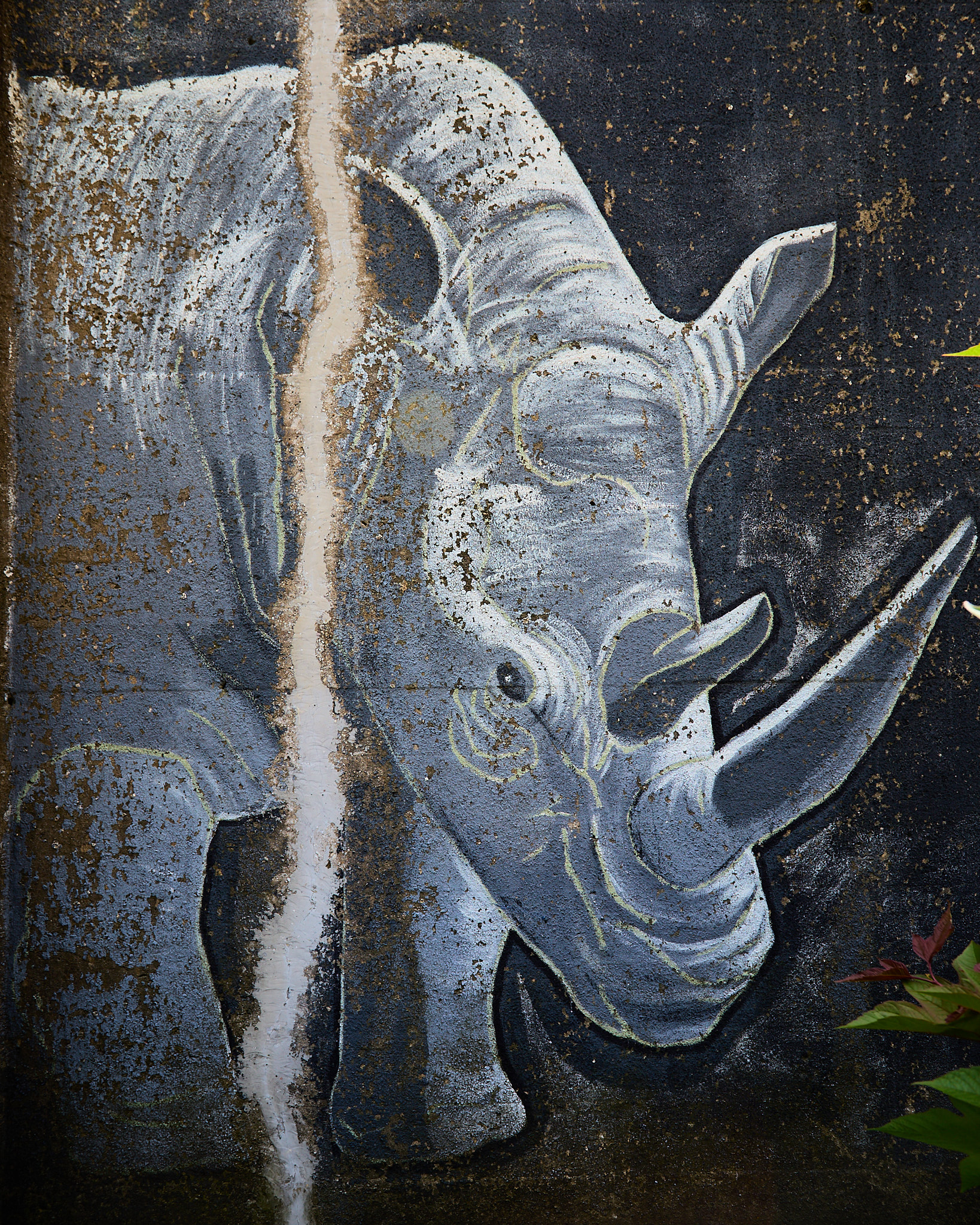
rhinoceros

Description for the visually challenged

The image features a mural of a rhinoceros, predominantly in shades of gray and white, set against a dark background. The mural shows the rhinoceros’s head and part of its body, with visible texture and wear on the surface. In the foreground, there are green leaves partially obscuring the bottom right corner.

a couple of ducks
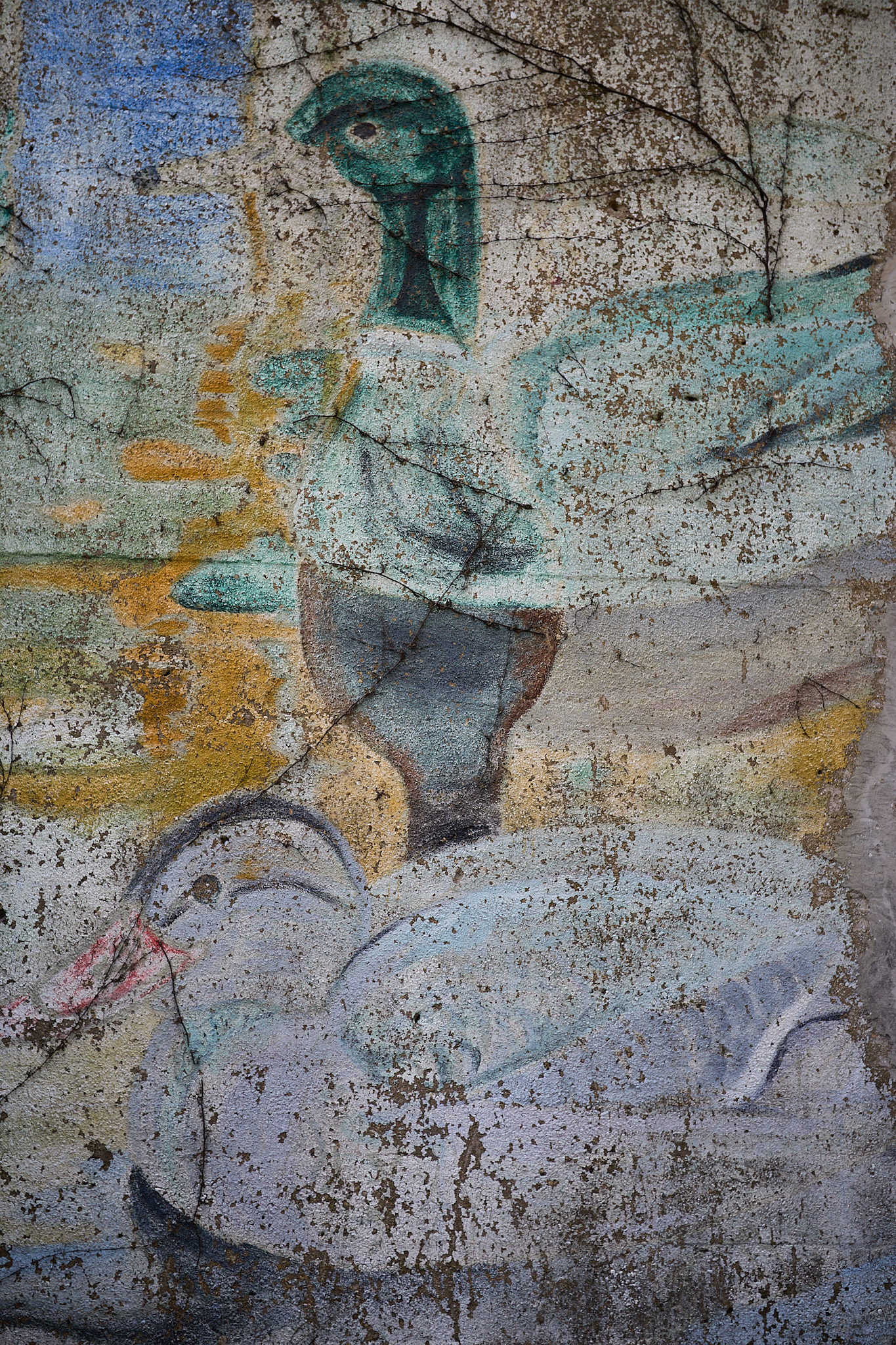
a couple of ducks

Description for the visually challenged

A mural depicting two ducks is visible on a weathered wall. One duck is shown in profile with a green head and a light-colored body, while the other duck appears to be resting with a grayish body. The background features muted colors and textures, with visible cracks in the surface.

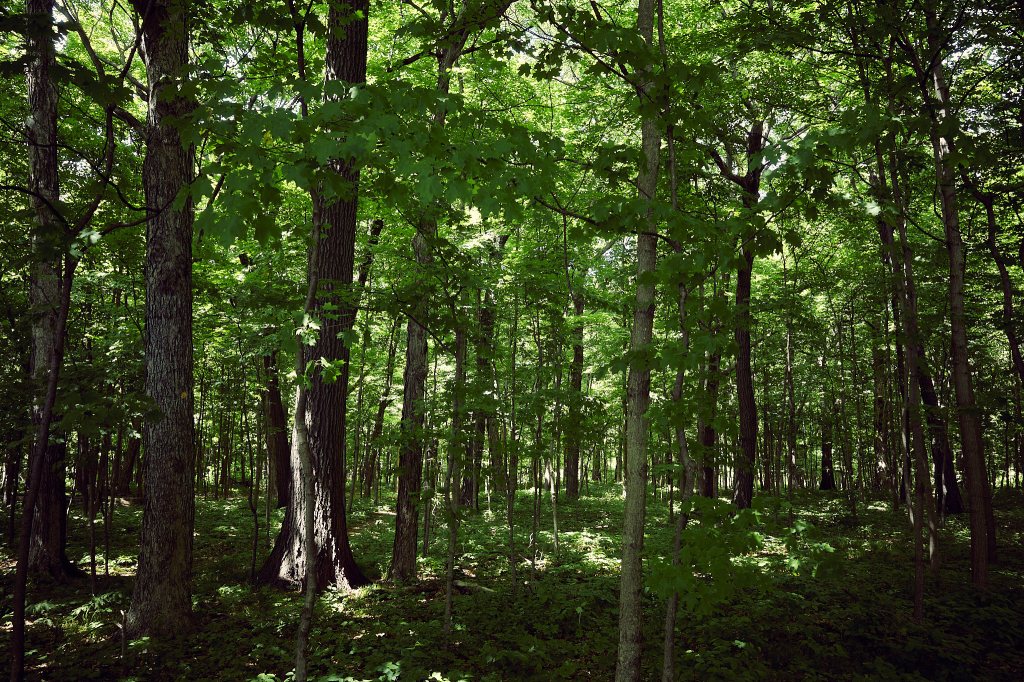
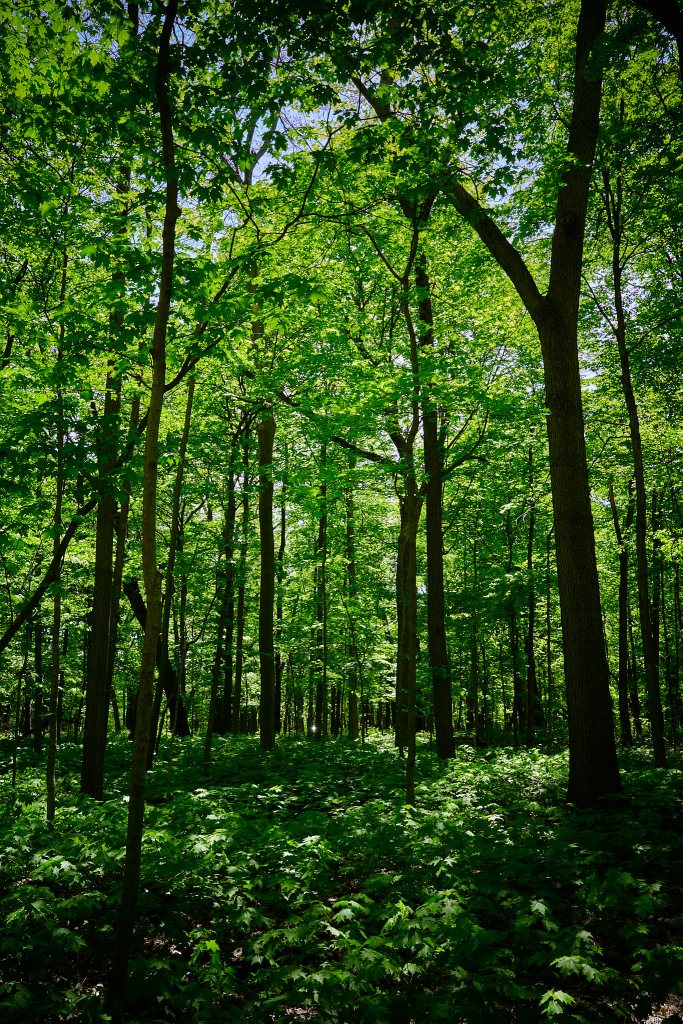
Breathing in, I know I am breathing in; breathing out, I know I am breathing out

picture of garbage

This mindful breathing practice, “Breathing in, I know I am breathing in; breathing out, I know I am breathing out,” holds a profound depth. It occupies a liminal space between the conscious and unconscious, where one can explore the dynamic balance between the autonomous functioning of the body and the influence of the mind.

When you breathe in, you may notice the cool air entering your body, filling your lungs. This active awareness underscores the physical aspect of the practice. On the exhale, you might perceive a sense of relaxation as you let go of the breath. Your breathing becomes an exploration of the present moment, a tangible connection to the here and now.

Bringing attention to this simple yet essential act fosters a unity between the body and mind, nourishing both. Conveniently, it’s a practice that doesn’t require a particular setting or time; it can be performed anytime, anywhere.

In moments of stress, shifting the focus to the belly can help calm the turbulent mind. Placing a hand on your stomach to feel the rise and fall of your breath anchors your awareness in the physical world. Thich Nhat Hanh uses the analogy of a tree: while the wind may buffet its crown, causing the branches to sway to and fro, the trunk remains steady and calm. Similarly, even amidst the turmoil of life, this practice can serve as your steady trunk, grounding you in the midst of chaos.

Finally, mindful breathing can deepen our understanding of our interconnectedness with the Earth. As we breathe in oxygen produced by plants and trees, and exhale the carbon dioxide they take in, we become more attuned to the cyclical nature of life and our place within these cycles. The ever-changing rhythm of our breath serves as a gentle reminder of the impermanence inherent in our existence.

This mindful breathing exercise is not just a technique for relaxation or stress reduction, but a pathway to experiencing interconnectedness, impermanence, and the richness of the present moment.

Smile and Release

In Thich Nhat Hanh’s mindful breathing exercise “Breathing in, I smile; breathing out, I release,” the concepts of smiling and releasing are combined to create a powerful tool for cultivating emotional balance, inner peace, and well-being.

The act of smiling is not necessarily directed at a specific object or person. Instead, it serves as a gentle reminder to cultivate feelings of joy, happiness, and gratitude within oneself. Smiling has been scientifically shown to release endorphins, which are natural chemicals in the brain that can help improve mood and reduce stress. By consciously choosing to smile as you breathe in, you are fostering a sense of inner happiness and contentment that is not reliant on external circumstances. The smile in this context is an expression of self-compassion, loving-kindness, and gratitude for the present moment.

On the other hand, the concept of “release” refers to the act of consciously letting go of any negative emotions, tensions, or stress that may have built up in your mind and body. When practicing this breathing exercise, the focus is on using the exhale as a means to release and let go of any feelings of anxiety, stress, anger, or emotional pain that you may be experiencing. This can help create space for positive emotions and thoughts to arise, fostering a sense of mental and emotional well-being.

By combining the act of smiling during the inhale with the release during the exhale, Thich Nhat Hanh aims to teach individuals how to cultivate emotional balance and inner peace. This practice encourages individuals to be aware of their emotions, acknowledge them without judgment, and then consciously release them, promoting a greater sense of mental clarity and emotional stability. In this way, the mindful breathing exercise of “smile and release” can have a profound impact on your mental and emotional well-being, as well as on your interactions with others.