Artistic Reflections on Anonymity and Urban Life

Some images stay with us for decades, resurfacing to link places and times that once seemed far apart. Three works of mine—from 1994, 2016, and the present—trace a continuous thread through themes of deindustrialization, anonymity, and urban life.

Dudley, 1994
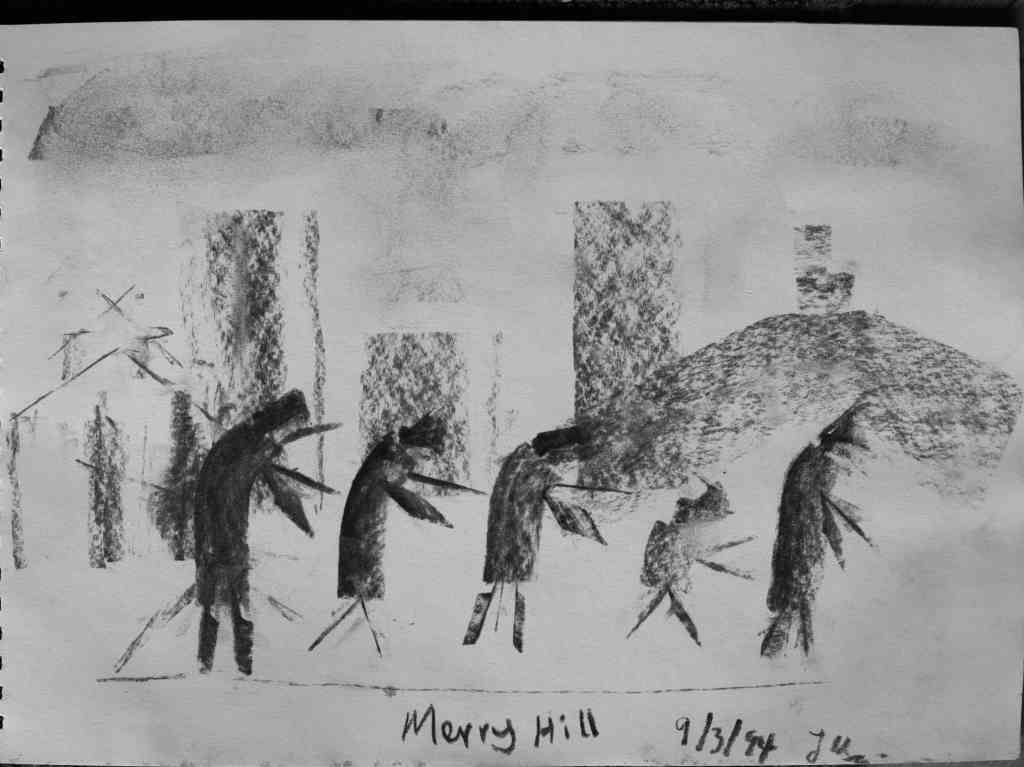
A charcoal sketch of five figures, drawn with rough strokes. Behind them are tall, textured shapes resembling buildings. The sky and ground are shaded lightly. Simple, abstract lines add to the minimalistic design.

I stayed in a hotel inside the newly built Merry Hill Mall. It did not feel merry. It echoed the steelworks and housing that had been cleared away. This drawing, made rapidly in charcoal, captures a landscape where industry had given way to retail, yet without comfort. The figures bend forward, anonymous, trudging through a place drained of joy.

For over twenty years this picture was lost, only resurfacing recently. Seeing it again, I was struck by its closeness to the Chicago work, despite being created in isolation. Its rediscovery started me thinking about the connections between them.

Chicago, 2016
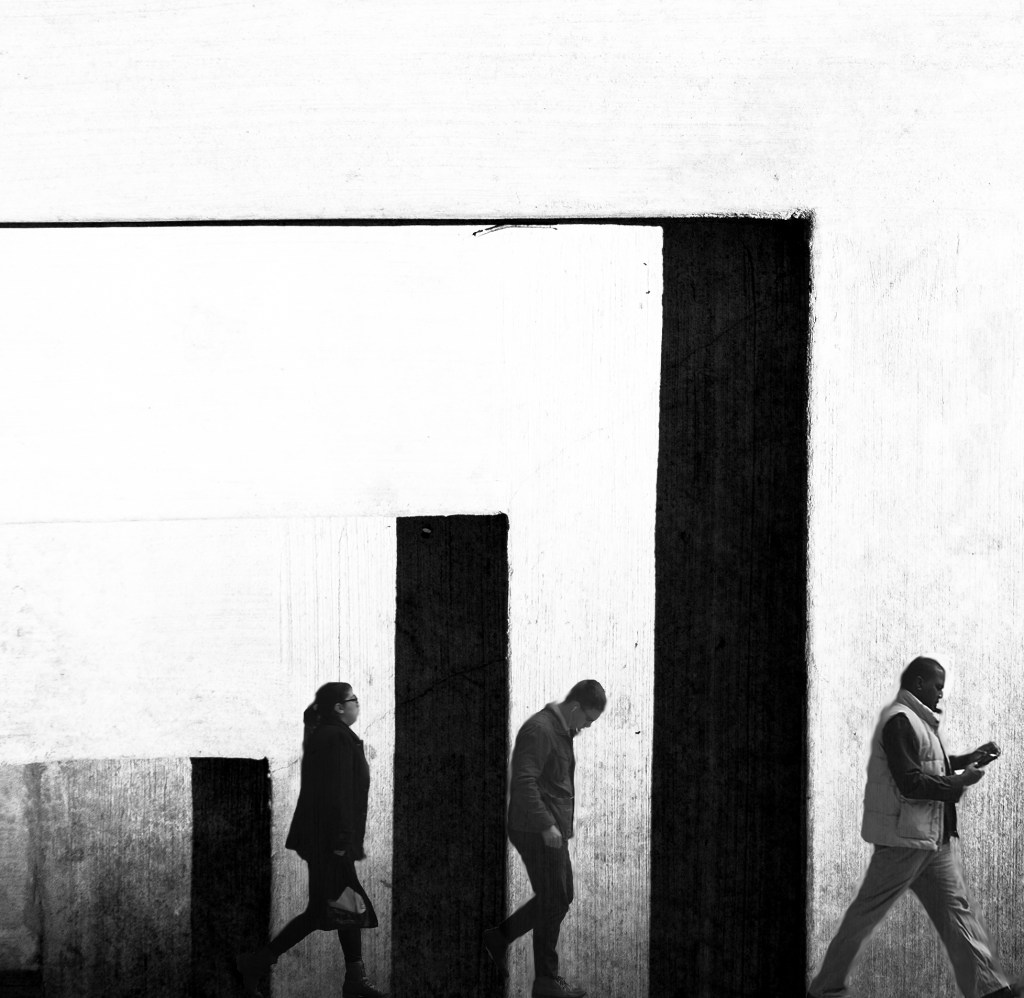
The image shows three people walking against a plain, white background with three vertical, thick, black bars of differing heights. The first person, a woman, is walking past the shortest bar. The second person, a man, walks past the middle-height bar. The third person, another man, is walking and reading a small book or device, in front of the tallest bar.

More than twenty years later, in Chicago, I made a second image. I was struck by the sight of people bent under routine, and thought of Lowry’s figures moving through harsh geometries. People pass in isolation, dwarfed by blocks of black and white. This picture echoes the first: a different continent, but the same themes of anonymity, repetition, and endurance.

Permanent Storage
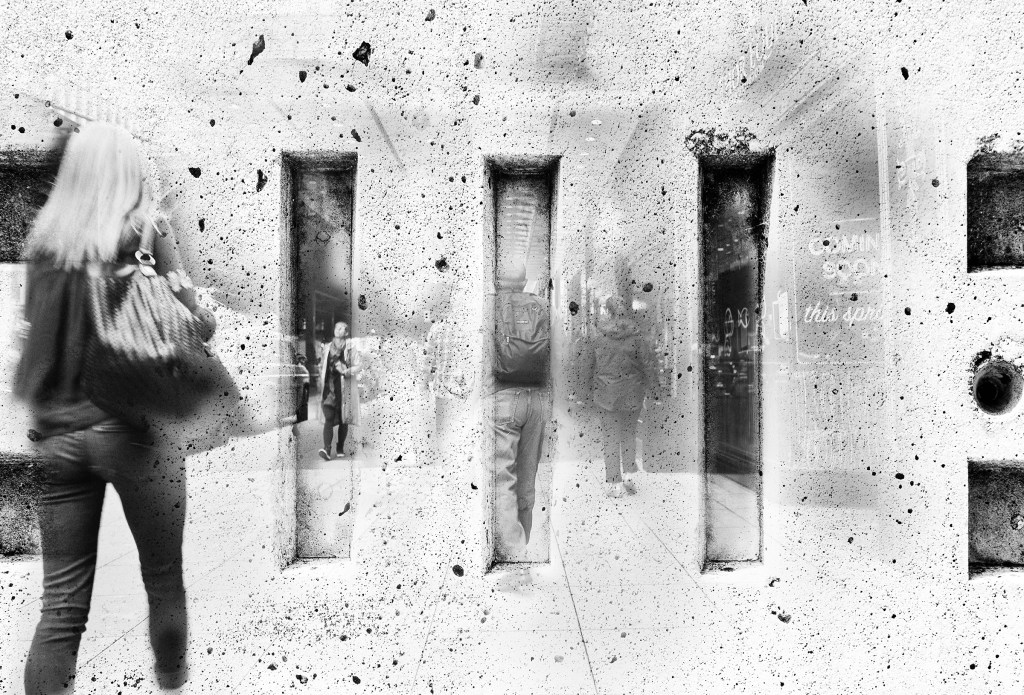
The image is a monochrome collage where people appear to walk through large vertical gaps in a textured concrete wall. The figures are semi-transparent, blending with the rough surface, as if merging with their surroundings.
For times when more durable storage may be required. The key difference in this picture is that it represents something impossible, people, merging into some inanimate object. To a degree, this represents my concerns about nuclear weapons, where the flash etches shadows of people on concrete.

The third piece, from 2016, was part of a series I titled Travellers. It imagines shadows left behind, as if seared onto concrete. It hints at rupture and at cracks where glimpses of something else might be caught. Unlike the first two, which show figures locked in a cycle, this one suggests the possibility of movement between states—a faint hope of passage.

Methods and Media

The first work is charcoal on paper, capturing immediacy and atmosphere. The later two are manually constructed collages of photographs, layering fragments of reality into new forms.

Shared Themes

  • Deindustrialization and its aftermath.
  • Figures reduced to silhouettes, caught in systems larger than themselves.
  • Urban environments that absorb individuality.
  • A longing to break free, even when unsure where freedom would lead.

Motivation and Context

The Travellers series, which includes Permanent Storage, began with a collaborative and technical process. I was working with other artists to create double-exposure films, combining images from separate locations. During this time, I was reading John Berger’s essay “Understanding a Photograph,” which argues that a photograph represents a specific moment selected by the photographer, removed from its original context in time.

My goal became to challenge that singularity of context and moment. I set out to create digital collages from elements shot over an extended period in various places, making new wholes from choices made across time. I explored how isolated each element felt—whether people looked out of place or belonged.

Permanent Storage is a result of that process. While other pieces in the series play with whimsy or dislocation, this one represents something impossible and more profound: people merging into an inanimate object. It connects directly to my concerns about nuclear weapons, where a flash etches the shadows of people onto concrete. In this way, the series moves from technique to philosophy: these constructed images become like Berger’s “traces of lived experience,” not as single moments, but as layered fragments of memory and history. They are not polished answers but hints at what lies behind the visible.

Closing Thoughts

These works span decades, yet they circle the same ideas. Have the places shaped the pictures, or has my own perspective repeated itself across time? The third image may be the outlier, or it may point to a shift: a suggestion that through cracks in the wall, something else can be seen.

Clear lines, simple forms, recurring shadows—together they form a record of how environments shape us, and how, even in repetition, the possibility of change remains. Perhaps the shadow is not only a mark of what has been lost, but also a doorway to what is still possible. The rediscovery of the first picture, long missing, underlines this: what is forgotten can return, linking distant times and places.
Legacy and Learning: A Penang Temple Mural

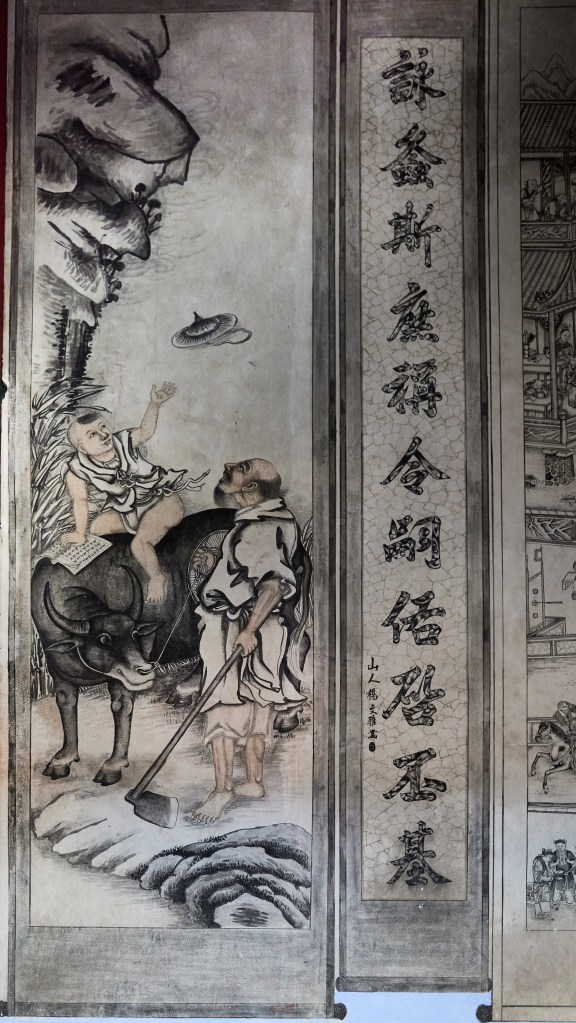
The image shows a detailed ink painting featuring a child sitting atop an ox and holding an open book. An older man stands beside them with a hoe, looking upwards. To the right, stylized Chinese characters form a vertical inscription in a separate section.

This photograph was taken on March 26, 2025, during a guided tour of Khoo Kongsi, one of Penang’s most iconic Chinese clan temples. Hidden within the historic George Town enclave, Khoo Kongsi is a richly ornamented hall built by the Khoo clan as both an ancestral temple and a communal heart for Chinese-Malaysian heritage. Murals like this, tucked among its stone carvings and red pillars, reflect the community’s values across generations.

In the painting, an elderly farmer stands barefoot by his plow, guiding a water buffalo with a young boy perched atop. The child, clutching a text and reaching toward a drifting straw hat, appears animated—caught between study and play. The elder, gaze raised, follows the boy’s gesture, his demeanor a blend of patience and quiet joy. The buffalo, steady and alert, completes the trio, symbolizing harmony between human effort, nature, and transmission of wisdom.

Alongside, a calligraphic inscription proclaims:

> 詩書傳家久
> 耕讀繼世長
> “Poetry and books pass down through the family for a long time.
> Farming and studying continue from generation to generation.”

This classical couplet embodies Confucian ideals, celebrating the dignity of labor and the continuity of learning. Together, the scene and the inscription reflect a peaceful rhythm of rural life in which tradition and vitality coexist.

Though the figures are static, there’s a quiet energy in the boy’s gesture, a dynamism that doesn’t disturb the stillness of the moment. In the gentle arc between elder and youth, one might sense a truth echoed in many traditions: the old lives in the young, and the present holds the imprint of generations. While not overtly Zen, the composition invites contemplation and hints at the principle of interbeing — the way all things contain and reflect each other.

✍️ Artist’s Signature (lower right):

山人楊玄齋畫
“Painted by the mountain recluse, Yang Xuanzhai”

Piranesi Circus


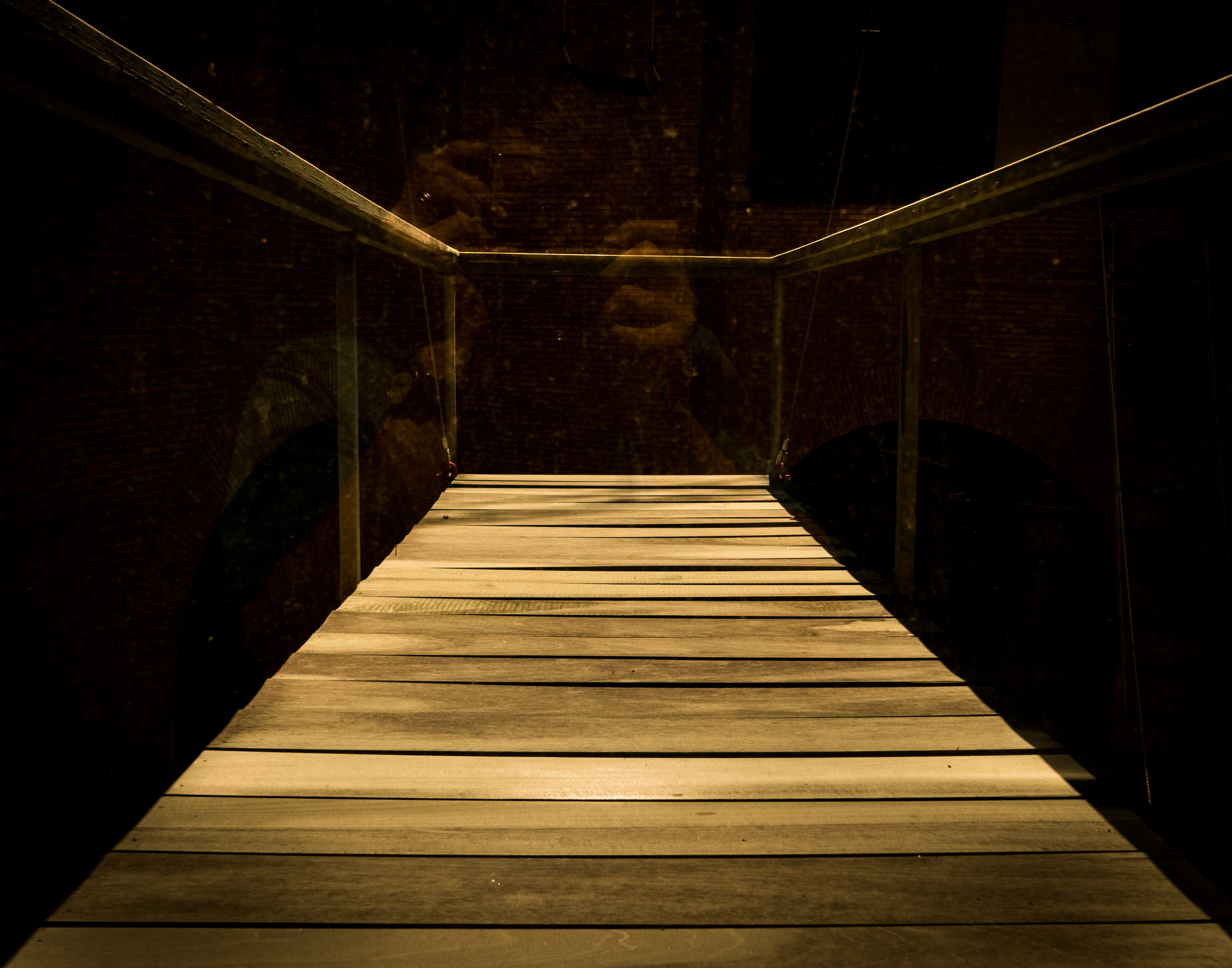
The exhibit in the courtyard in the middle of the Chicago cultural centre has always made a strong impression on me.

I later found out that the work, the Piranesi Circus, was from the Chicago firm Woodhouse Tinucci Architects who worked with Tokyo-based Atelier Bow-Wow on the execution and construction of the project along with Thornton Tomasetti (structural); Chicago Scenic Studios (fabrication).

G.B. Piranesi’s Carceri d’Invenzione (Imaginary Prisons) influenced the work where the vast interior spaces can be considered a visual metaphor for the mind. I wanted to focus on the individual elements by reducing the composition by limiting exposure and tonality.

See also: http://www.woodtinarch.com/2015-cab Marguerite Yourcenar = (The Dark Brain of Piranesi)

I took the pictures in the summer of 2017 always around midday when the sum evenly illuminates the courtyard. Since access to the yard is limited, the images were shot through the windows and provided some reflection on the inner of the building.

The cantilevered balcony lurches out into the void and challenges the observer to enter.

kibitzer

The use of a ladder that leads nowhere provides a recollection of dreams where the subject works in some unending loop.


The swing/trapeze hangs waiting and expresses a feeling of desire.


Zone System overview

ZoneSystem-Gradient-lines

Ansel Adams and Fred Archer formulated the zone system to give photographers a systematic way to set the correct exposure.

Film photographers were the original users of the system; however, the technique is still relevant when shooting digital.

The fundamental concept is that exposure meters give a reading that correctly exposes middle grey.

Middle grey exposure works for most situations. However, there are exceptions:

Light tones dominate
Consider shooting a picture of a very light subject, for example, snow – since the meter gives exposure for middle grey (not nearly as bright as the subject) the reading given underexposes the subject. The underexposure is because the meter brings the luminance down to middle grey.
To get the correct exposure the photographer needs to increase the exposure by a few stops.

Dark tones dominate
Conversely, if you are shooting a dark subject, for example, dark wood, then the meter gives an exposure that brings the dark up to medium grey, again the yields the dark wood tones overexposed – so the photographer needs to reduce the exposure.

To take your shooting to the next level, start to look at the scene you are photographing and decide the tonalities you want in your picture, are the main subjects dark or light? How do you want them to appear?

Once you have decided the tonalities you want, you can use the table below to figure out the appropriate zone.

Zone Description
0 Pure black
1 Near black, with slight tonality but no texture
2 Textured black; the darkest part of the image where you can see small detail
3 Average dark materials and low values showing adequate texture
4 Average dark foliage, dark stone, or landscape shadows
5 Middle grey: clear north sky; dark skin, average weathered wood
6 Average Caucasian skin; light stone; shadows on snow in sunlit landscapes
7 Very light skin; shadows in snow with acute side lighting
8 Lightest tone with texture: textured snow
9 Slight tone without texture; glaring snow
10 Pure white: light sources and specular reflections

There is a one stop difference between each zone. Let’s suppose you decide the primary tones are in zone 8 since that is three stops above zone 5 so you will need to increase the exposure by three stops to get the exposure right.
For example, if your meter read f16, then you would use f 5.6 when taking the picture (remember that reducing the F-stop increases the exposure).

Hubbard Street murals project

hubbard

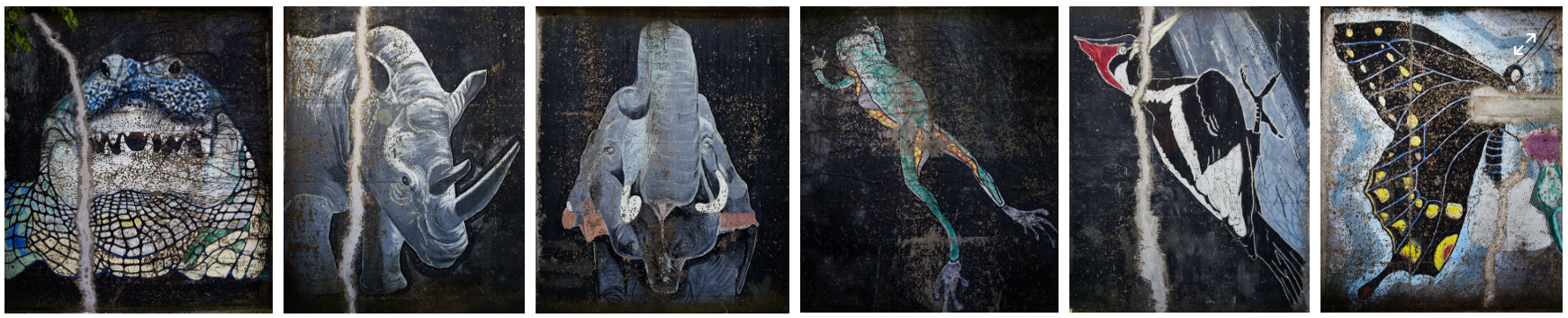
I undertook this project to photograph some of what was the Hubbard Street mural project initiated in the 1970’s by Ricardo Alonzo, an Art Institute of Chicago graduate.

Over an eight-year period, Alonzo and volunteers from the West Town Community Art Center painted murals along a mile-long stretch of Hubbard Street, from Des Plaines to Ogden, until their funding ran out in 1979.

I first noticed the murals out my Metra train window while I was looking to produce a project influenced by Wabi-sabi, and how it translates to an urban environment outside of Japan. They provided an ideal way to explore how time and decay have affected these artworks.

BigCat


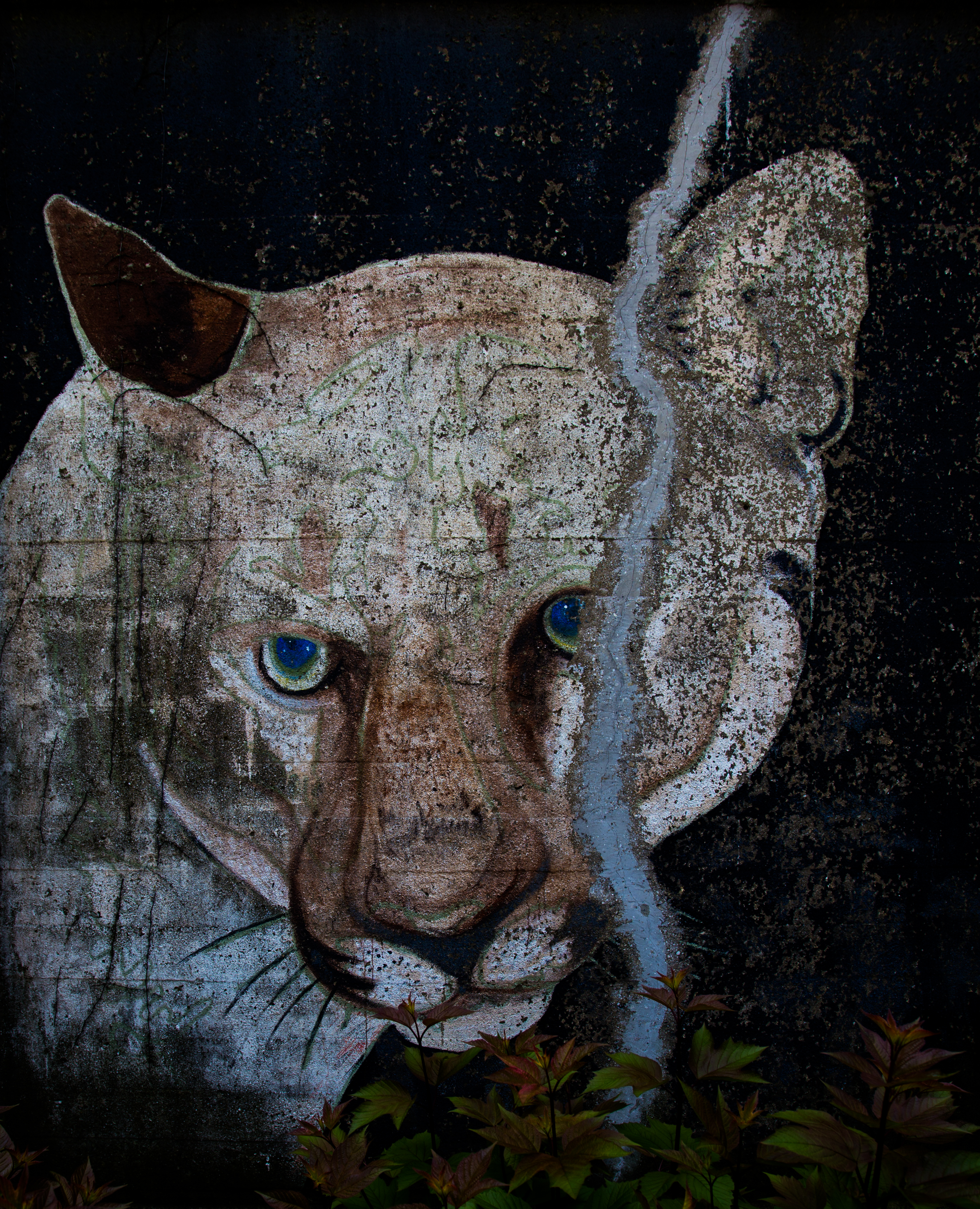
The originals would have been vibrant and colourful, time, paint overs, weather and construction have taken their toll on the work.

Most people will not see the murals because they are in an obscure place, where most people wouldn’t ordinarily have a chance to view them. I want to raise awareness of this still-vibrant, if fading, original community project, and to introduce some of my work locally.

After producing some shots in monochrome, I decided to reshoot the set in colour to have a better record of the original work.

You see the full set of pictures here