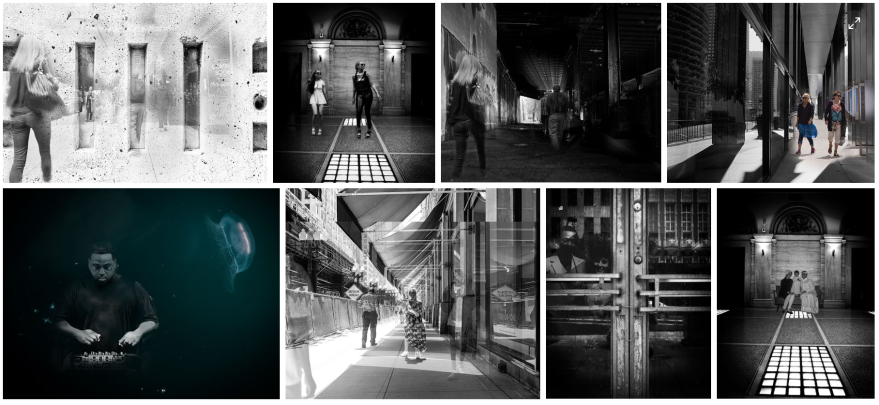
I have worked with several artists on Ello to produce random collaborations using films double exposures by different people in separate locations. During that time I read John Berger’s essay “Understanding a photograph” first published in 1968, and was interested in the view that a photograph represents a single choice made by the photographer at some small slice of time in the past.
I set out to create a set of pictures that combined different elements of photographs shot over an extended period, in various places, into a digital collage with the intention to allow the arrangement of the different parts into some new whole based on choices made over time.
Some of the resulting pictures are whimsical others reflect my feelings on life and our current situation, but all gave me a way to explore how different objects and symbols work together.
While putting the pictures together, I wanted to see how isolated each element was, for example, did people look out of place in the shots taken inside the Chicago cultural centre. In the case of Sea of green, Terry Hunter is clearly out of place illuminated by a jellyfish in the sea.
The ghost of summer shoppers shows people taken at that location over a short period; apart from the multiple exposure effects they all belong there.
Boogie Pilgrims
What happened to the band? Two singers separated from the band by space and time.
Is that you?
Two women from Iceland find themselves in Chicago. In this picture leaving the Iceland components in colour causes separation. Otherwise, they could be people from anywhere walking in Chicago.
Budget Mind Altering
I do not recommend mind-altering on a budget – they all wanted somewhere different but not here. This shot has regular people moved to an unusual location under the tracks; they hurry as if they have awoken somewhere disturbing.
Permanent Storage
For times when more durable storage may be required. The key difference in this picture is that it represents something impossible, people, merging into some inanimate object. To a degree, this represents my concerns about nuclear weapons, where the flash etches shadows of people on concrete.
Sea of green
Terry Hunter – Chosen Few DJ’s sharing the green seas off Iceland with a Jellyfish
Ghosts of summer shoppers
The ghost of summer shoppers shows people taken at that location over a short period; apart from the multiple exposure effects they all belong there.
Why here
The people shown were my teachers family, from when I lived in the middle east in the 1960’s, educated, generous and kind, yet we will now show them the wall no matter what pain they suffer. In this case, they arrive in the Chicago cultural centre; they would have surely liked that. The original image was shot on 35mm Kodachrome 64.
Still waiting for the great leap forward
The people in the picture were my neighbours from 35 years ago when I lived in Sheffield (UK) – for some reason, a test strip print of them was left in a box of old prints I have. I didn’t print all their pictures at the time.
 , for example. although this image was rescuable from a raw file, there quite a few images that were about 1 stop overexposed.
 t white background on seamless paper, things would soon go wrong. On the small screen the pictures looked good, but back at the ranch, they were all “washed out” by overexposing the background. It took longer to rescue these, plus there were a lot of images.
 John Unwin Photography