Rouen, Normandy — May 2025
In the heart of Place du Vieux-Marché in Rouen, where Joan of Arc was burned at the stake in 1431, stands a memorial that speaks less of death and more of enduring presence.
“Ô Jeanne, sans sépulcre et sans portrait,
toi qui savais que le tombeau des héros
est le cœur des vivants.”“O Joan, without a tomb and without a portrait,
you who knew that the tomb of heroes
is the heart of the living.”
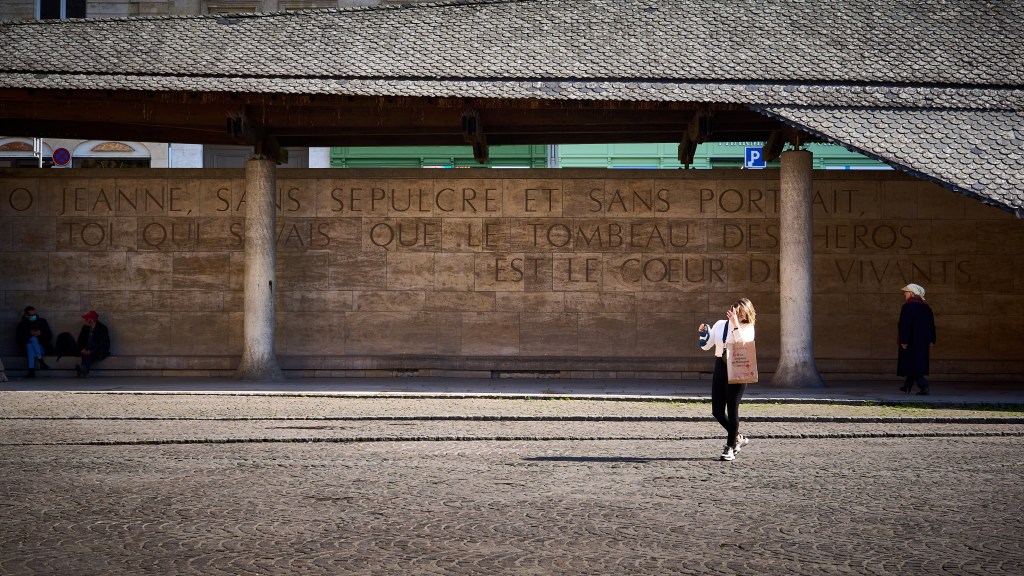
Joan has no grave, no authentic portrait. Yet she remains vividly alive in history — not only as a saint and symbol, but as a challenge. Standing in that square today, it’s clear that her story doesn’t end in 1431. It summons us.
In my lifetime, we have seen the tools of war, greed, violence, and injustice indiscriminately applied to the weakest — women, children, and the vulnerable, too often caught in the fire across the globe.
Perhaps that’s where Joan matters now. Not simply as a martyred teenager, but as a figure who might urge the living to reclaim the courage of the past. To animate, not glorify, the memory of those who stood for something. To act — not in her name, but in her spirit.
The young woman walking across the frame of our photograph may not have noticed the inscription. But her presence mirrors Joan’s youth. It reminds us that the task of remembering is not passive, and that the hearts of the living are still the only true tombs for the fallen — and perhaps the only hope for what comes next.
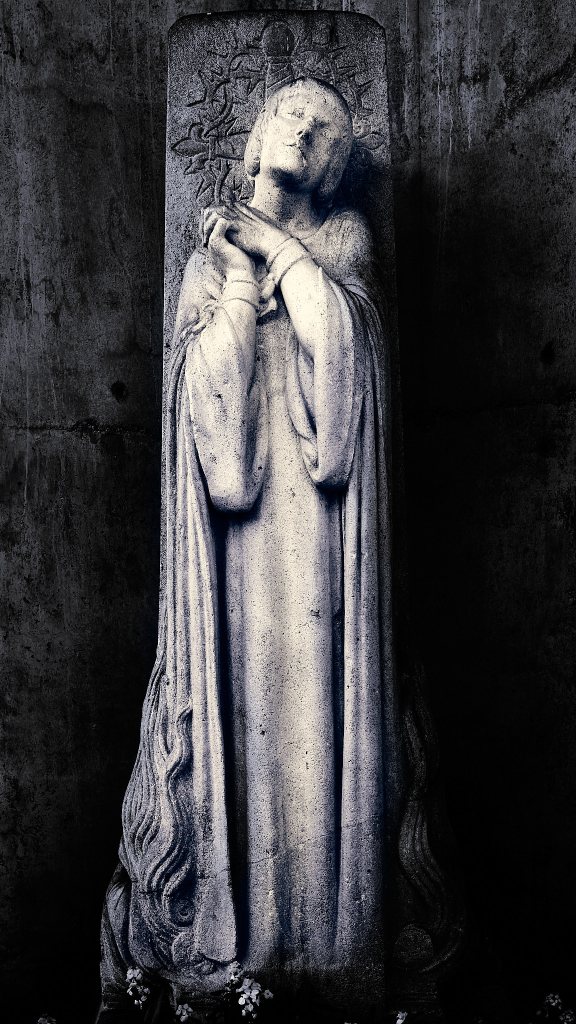
Written after a visit to Rouen, May 2025.
 John Unwin Photography